Moving to Panama
A complete 2026 guide to relocating to Panama: what it really costs, how safe it is, the residency routes that make it simple, healthcare, and where expats actually settle.
Panama has quietly become one of the easiest places in the world for a North American or European to move to. It runs on the US dollar, sits outside the hurricane belt, has one of the most welcoming residency programs anywhere, and offers everything from Caribbean beaches to cool, spring-like mountain towns, all a short flight from the US. This guide covers what it costs, how safe it really is, how you get to stay, and where you would actually want to live.
At a glance
- Panama runs on the US dollar. The balboa is pegged 1:1 and only circulates as coins, so there is no currency risk on your savings or your pension.
- Foreign income is not taxed. Panama uses a territorial system: money earned outside the country is outside the tax net, whatever your residency status.
- A deadline worth knowing. The Qualified Investor Visa property threshold rises from $300,000 to $500,000 on 15 October 2026. That is the single most time-sensitive fact on this page.
- A retired couple lives well on $2,000 to $2,800 a month in Boquete or Coronado, and $2,800 to $4,200 in Panama City.
- Residency is genuinely easy by international standards, with four separate routes and citizenship available after five years of permanent residence.
- Build costs run $80 to $140 per square foot, roughly a fifth of what the same house costs in the coastal Caribbean.
Why people move here
- The dollar economy. No currency risk, since your savings and income are already in the local currency.
- Easy residency. The Friendly Nations and Pensionado programs are among the most accessible in the world.
- Outside the hurricane belt. Unlike much of the Caribbean, mainland Panama rarely takes a direct hurricane.
- Climate for every taste. Hot beaches at sea level, and eternal-spring towns like Boquete in the highlands.
- Close and connected. Three to five hours to most US hubs, a modern airport, and good internet in the main areas.
- Real infrastructure. Panama City is the most developed capital in Central America, with world-class private hospitals.
What it costs to live in Panama
Panama is cheaper than the US, though not the cheapest country in Latin America, and the range is wide depending on where and how you live. A retired couple living modestly in the interior, meaning Boquete, Coronado, or David, can live well on about $2,000 to $2,800 a month. Panama City costs noticeably more, and a frugal single person in the interior can spend far less. Here is a realistic mid-range monthly budget for a couple:
| Monthly expense | Typical range (a couple, USD) |
|---|---|
| Rent (1–2BR, outside the capital) | $700–1,400 |
| Groceries | $400–600 |
| Dining out & entertainment | $200–400 |
| Utilities + internet (AC drives this) | $120–250 |
| Private health insurance (couple, 50s–60s) | $150–400 |
| Transport (car or taxis/buses) | $150–350 |
| Typical total (comfortable, interior) | $2,000–2,800 |
Three things move that number most. Where you live, since Panama City costs far more than the interior. How hard you run the air conditioning, because a lowland beach house on constant AC costs much more to keep cool than a breezy highland home that needs none. And healthcare.
What the same life costs in five different towns
Panama is small enough to drive end to end in a day and varied enough that your monthly number can nearly double depending on which town you pick. This is the same couple, same standard of living, in five places:
| Town | Elevation | Rent, 2BR | AC needed? | Couple, all-in |
|---|---|---|---|---|
| Panama City | Sea level | $1,100–2,200 | Constantly | $2,800–4,200 |
| Coronado & Pacific beaches | Sea level | $900–1,700 | Constantly | $2,400–3,400 |
| Bocas del Toro | Sea level | $700–1,500 | Usually | $2,200–3,000 |
| Boquete | 3,900 ft | $650–1,300 | Never | $2,000–2,800 |
| Volcán & Cerro Punta | 4,600–6,500 ft | $450–900 | Never | $1,700–2,400 |
| David | Sea level | $500–1,000 | Constantly | $1,700–2,400 |
The air conditioning line nobody budgets for
Electricity in Panama runs about $0.17 per kilowatt-hour, which is reasonable, but a lowland house running air conditioning around the clock can pull 1,200 to 1,800 kWh a month. That is $200 to $310 just to stay cool. The identical house in Boquete at 3,900 feet uses none of it, and monthly power lands nearer $45 to $80.
Over ten years that single difference is roughly $25,000. It is the strongest practical argument for the highlands, and it is why so many people who arrive at the beach end up in the mountains. Figures are 2026 approximate, so confirm current prices before you budget.
What things actually cost
| Item | Panama | US comparison |
|---|---|---|
| Local lunch (menú del día) | $4–7 | $15–20 |
| Dinner for two, good restaurant | $35–60 | $90–130 |
| Domestic help, per day | $25–35 | $150+ |
| Specialist doctor visit, private | $40–80 | $250–400 |
| Litre of petrol | $0.95–1.10 | $0.90–1.05 |
| Fast internet, fibre | $35–60/mo | $70–100/mo |
| Imported cheese, wine, electronics | Higher than the US | — |
That last row is the honest catch. Anything grown, cooked or done by hand in Panama is cheap. Anything shipped in carries duty and freight, and a familiar brand of anything will often cost more than it does at home. Households that eat local eat cheaply. Households that reproduce a US shopping list do not save much on groceries at all.
Taxes: the territorial system
This is the part most people get wrong, in both directions. Panama is not a zero-tax country, and it is also not going to tax your foreign pension, your US dividends or your remote salary.
Panama taxes on a territorial basis. Income sourced inside Panama is taxable. Income sourced outside Panama is not, and that holds whether you are a tourist, a resident or a citizen. A retiree drawing a US pension, an investor living on offshore dividends and a remote worker employed by a company abroad all owe Panama nothing on that income.
| Tax | Rate | Applies to |
|---|---|---|
| Income tax, Panama-source | 0% to $11,000; 15% on $11,000–50,000; 25% above $50,000 | Only income earned inside Panama |
| Income tax, foreign-source | 0% | Pensions, offshore dividends, remote salaries |
| Capital gains, Panama real estate | 10% on the gain, commonly settled as 3% of the sale price | Sellers of Panamanian property |
| Property tax, primary residence | Exempt to $120,000 of registered value; 0.5% to $700,000; 0.7% above | Your main home, once registered as such |
| Property tax, other property | Exempt to $30,000; then 0.6% to 1.0% by band | Second homes, rentals, land |
| Transfer tax on sale | 2% of value, paid by the seller | Property transfers |
| ITBMS (sales tax) | 7% | Most goods and services; basic food and medicine exempt |
The practical upshot: register your home as your primary residence and the first $120,000 of its registered value carries no annual property tax at all. On a typical $250,000 highland house that reduces the yearly bill to roughly $650. Compare that to $4,000 or more on an equivalent house in Florida.
US citizens still file with the IRS on worldwide income wherever they live. The Foreign Earned Income Exclusion and foreign tax credits may reduce what you owe, but the filing obligation does not go away. Get cross-border advice before you move, not after.
Is Panama safe?
The US State Department rates Panama Level 2, exercise increased caution, the same tier as France, Italy and Spain. Two areas carry their own higher ratings: the Darién province on the Colombian border is Level 4, do not travel, and parts of Colón are Level 3. Neither is anywhere an expat would live, and both are hours from the towns in this guide.
For an expat living in the usual places, Panama is one of the safer countries in Latin America, comparable to a mid-sized US city, and the mountain and beach towns where most expats settle are notably calm. Like anywhere, there is petty crime in parts of Panama City and a few areas to avoid, such as Colón and the Darién near the Colombian border, and normal urban common sense applies. Violent crime sits well below the regional average, the tourism infrastructure is mature, and the large, established expat communities are a good sign of day-to-day life. It is not a place most expats feel unsafe.
Residency, the easy part
This is Panama's superpower, and there are four real routes rather than the two most guides mention. Which one fits depends entirely on whether you have a pension, a passport from the right list, or capital.
| Route | What it takes | Status granted | Timeline |
|---|---|---|---|
| Pensionado | $1,000/month lifetime pension ($750 if you own $100,000+ of Panamanian property), plus $250/month per dependant | Permanent residency immediately, plus the discount card | A few months |
| Friendly Nations | Citizenship of one of ~50 listed countries, plus $200,000 in property, or a $200,000 three-year bank CD, or a Panamanian employment contract | Two years temporary, then permanent | Filing in as little as 72 hours |
| Qualified Investor | $300,000 in real estate (rising to $500,000 on 15 Oct 2026), or $500,000 in securities, or $750,000 on deposit | Permanent residency immediately, no provisional phase | 30 to 90 days |
| Reforestation / business | Investment in a certified reforestation project, or forming a Panamanian company with local employees | Temporary, then permanent | Varies |
The 15 October 2026 deadline
Under Executive Decree No. 193 of October 2024, the Qualified Investor Visa real-estate threshold is scheduled to rise from $300,000 to $500,000 on 15 October 2026. That is an extra $200,000 of capital locked up for the identical outcome.
Two honest caveats. The change has been announced and deferred before, so it may slip again. And a deadline is a terrible reason to buy property in a country you have not lived in. If you were already going to invest at this level in Panama, the arithmetic is real and the window is short. If you were not, do not let a date make the decision.
The pensionado discounts are not a gimmick
Panama's retiree programme, set out in Law 6 of 1987, carries the most generous statutory discount schedule of any retirement visa in the world, and it applies to anyone 18 or over with a qualifying lifetime pension. There is no minimum age.
| Discount | On what |
|---|---|
| 50% | Entertainment: cinema, theatre, concerts, sporting events |
| 50% / 30% | Hotels Monday to Thursday / Friday to Sunday |
| 30% | Public transport: bus, boat, train |
| 25% | Airline tickets, restaurant meals, electricity (to 600 kWh), telephone |
| 20% | Medical consultations, professional and technical services, prosthetics |
| 15% | Hospital bills where you carry no insurance, dental and eye exams, personal loans |
| 1% | Off the interest rate on a mortgage for your own home |
A couple using these routinely recovers $150 to $350 a month in real terms, which is a meaningful fraction of a $2,400 budget.
What disqualifies people
- The pension must be a pension. It has to come from a government, a company scheme, a trust, a mutual fund, a bank or an insurance company, and it has to be for life. Rental income, investment income and self-employment income do not qualify, however large. This is the single most common reason a pensionado application fails.
- Friendly Nations is nationality-gated. Roughly 50 countries are on the list, including the US, Canada, the UK, Australia and most of the EU. If your passport is not on it, this route is closed regardless of your finances.
- You cannot file it yourself. Under Decree Law No. 3 of 2008, every immigration application must be filed through a licensed Panamanian attorney. Budget $4,500 to $9,700 in legal and government fees for a single applicant.
- Two years away and you lose it. Permanent residency lapses if you spend more than two consecutive years outside Panama.
Citizenship becomes available after five years of permanent residence. Rules and minimums change, so confirm current requirements with a Panamanian immigration attorney before committing money. The headline is real: Panama wants foreign residents and has built the programs to match. See our QIV guide for the investment route in detail.
Healthcare, and what it actually costs
Panama has good, affordable healthcare, and Panama City is the medical capital of Central America. Hospital Punta Pacífica is affiliated with Johns Hopkins Medicine International; Pacífica Salud and Hospital Nacional are the other two major private centres. In Chiriquí, Hospital Chiriquí and Mae Lewis in David serve the whole western highlands, roughly 45 minutes from Boquete.
| What you need | Panama, private | US, uninsured |
|---|---|---|
| GP consultation | $25–50 | $150–300 |
| Specialist consultation | $40–80 | $250–400 |
| MRI scan | $300–600 | $1,200–3,000 |
| Dental cleaning | $35–60 | $120–200 |
| Crown | $300–500 | $1,100–1,800 |
| Overnight, private hospital room | $150–300 | $2,500+ |
| Local health insurance, couple in their 60s | $150–400/mo | $1,400–2,200/mo |
The common expat strategy is worth understanding: rather than buying comprehensive cover, many people pay routine care out of pocket (because an $80 specialist visit is not worth claiming) and carry a hospitalisation-only policy for the catastrophic case. That combination often runs under $200 a month for a couple and covers the risk that actually matters.
Two limits to know. Local policies frequently exclude pre-existing conditions and typically will not cover treatment outside Panama, so if you want the option of flying to the US for a serious diagnosis you need an international policy, which costs several times more. And insurers here generally will not write a new policy after roughly age 65 to 70, so if Panama is the plan, buying cover before you move is materially cheaper than buying it after.
Choosing your town
Panama fits a lot of very different places into a small country, and the choice is really about elevation. Every degree of latitude matters less here than every thousand feet of altitude:
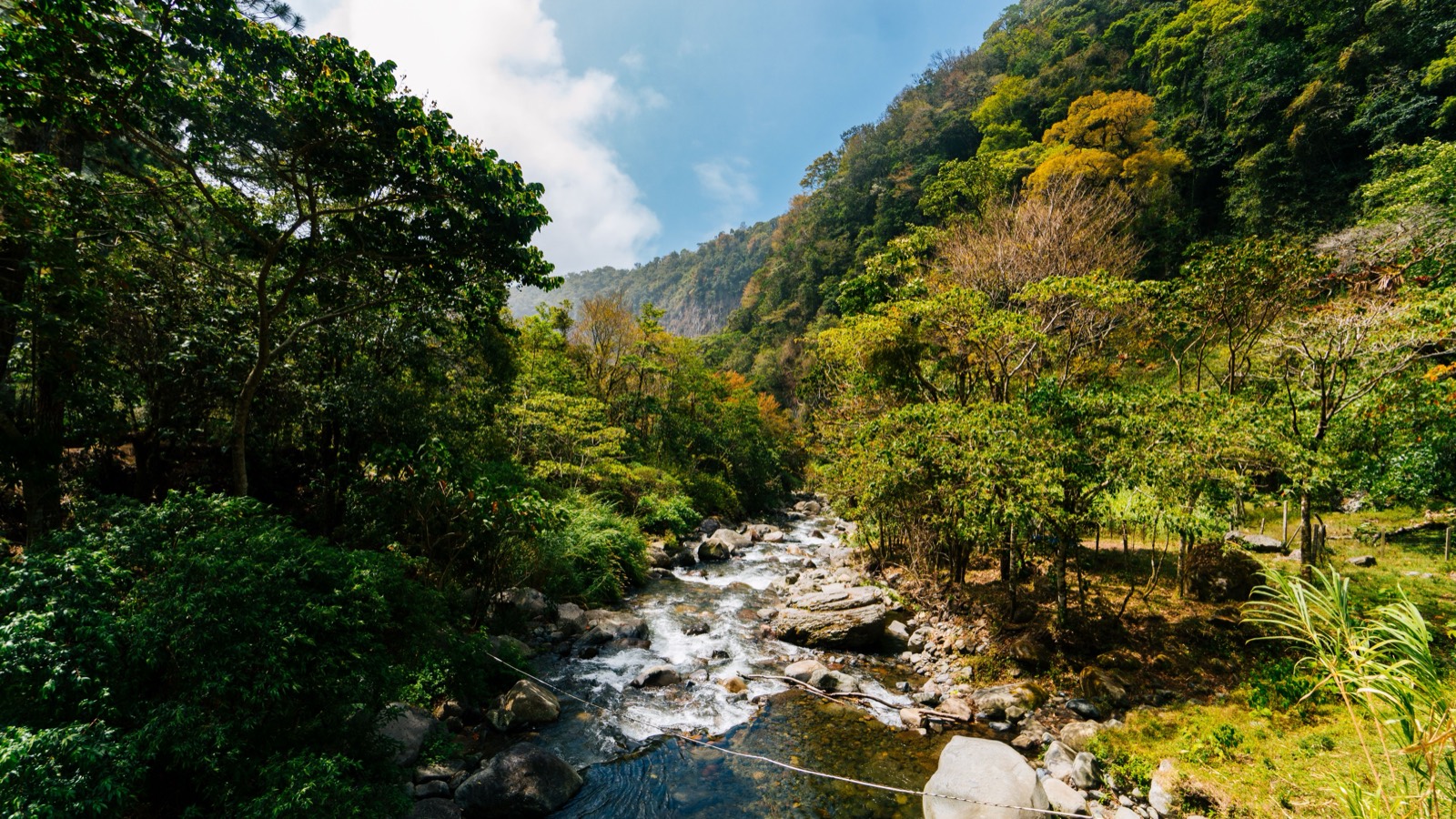
- Boquete, in the Chiriquí highlands, is the flagship expat town. Eternal spring, Geisha coffee, a big established community, and no need for AC. Read our complete Boquete guide.
- Volcán and Cerro Punta are cooler, greener, cheaper highland alternatives. See Volcán real estate.
- Pedasí and the Azuero coast offer laid-back beach-town life. Compare in Boquete vs Pedasí.
- Coronado and the Pacific beaches are the closest beach hub to the capital, and very convenient.
- Bocas del Toro is Caribbean-island living, funky and beautiful, and a little more rustic.
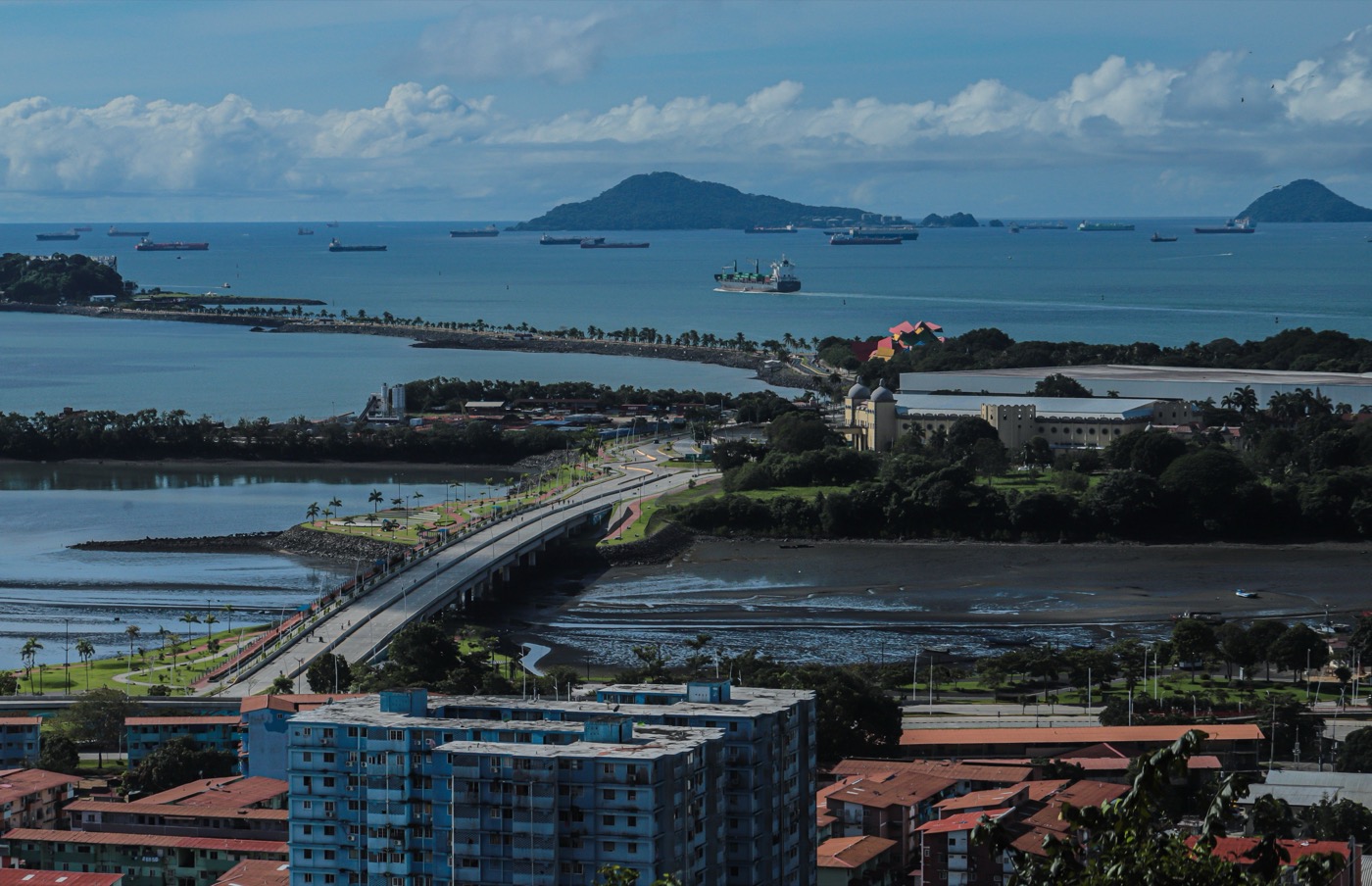
- Panama City is for anyone who wants a real cosmopolitan capital: skyline, restaurants, top hospitals, and an international airport.
Buying or building a home
Foreigners can own titled property outright in Panama, and building your own home is very achievable, often for less than buying finished. Start with our 2026 cost-to-build breakdown, our guide to buying land as a foreigner, and how to vet a custom home builder. Building in reinforced concrete, the regional standard, gives you a durable, insurable, storm-ready home.
The trade-offs to know
- Bureaucracy is slow. "Mañana" is real, and paperwork, utilities, and permits take patience.
- The rainy season is wet, roughly May through November, with daily downpours. The highlands stay green and lush for it.
- Not everywhere is cheap. Panama City and imported goods can surprise you, so the savings are real but selective.
- Spanish helps a lot. You can get by with English in the expat hubs, but life is far easier with some Spanish.
- Infrastructure varies. Power and internet are good in the hubs and patchier in remote spots.
Sources & how to verify this
Immigration thresholds and tax bands change, and several figures on this page moved during 2026. Everything here was checked on 12 August 2026 against the sources below. Confirm anything you are about to act on.
- Residency: Servicio Nacional de Migración (migracion.gob.pa) is the authority. Executive Decrees 197 and 226 of 2021 govern Friendly Nations; Decree 722 of 2020 as amended by Decree 193 of 2024 governs the Qualified Investor Visa; Law 6 of 1987 sets the pensionado discount schedule.
- Tax: Dirección General de Ingresos (dgi.mef.gob.pa) publishes the income-tax bands and property-tax tables.
- Safety: US State Department country advisory, current as of 2026.
- Costs: cross-checked against local listings, utility tariffs and our own build and operating data from projects in Chiriquí and the Azuero peninsula.
Where a number is a range rather than a figure, that is deliberate. Panama has wide regional variation and quoting a single national average would be less useful, not more precise.
How to make the move
- Visit first, in both seasons. Spend real time in two or three candidate towns, ideally including the rainy season.
- Rent before you buy. Live in an area for six to twelve months before committing to property.
- Engage a Panamanian immigration attorney to pick and file the right residency route.
- Sort banking and healthcare. Open a local account and line up private insurance.
- Then buy or build, once you know the area. SORA can help here.
Thinking about a home in Panama?
SORA helps foreign buyers find land, build, and settle in Panama and Costa Rica, with fixed-price design-build and people on the ground. The easiest place to start is what a home actually costs.
See 2026 build costs →Frequently asked questions
How much money do you need to live comfortably in Panama?
A retired couple living modestly in the interior, such as Boquete, Coronado, or David, can live comfortably on roughly $2,000 to $2,800 a month, covering rent, food, utilities, healthcare, and transport. Panama City costs more, and a frugal single person can spend considerably less. Heavy air-conditioning use and imported goods are the main things that push a budget up.
Is Panama safe to live in?
For expats in the usual areas, yes. Panama is among the safer countries in Latin America, with violent crime well below the regional average and calm, established expat communities in the mountain and beach towns. Normal urban caution applies in parts of Panama City, and a few areas such as Colón and the Darién border are best avoided.
What is the easiest way to get residency in Panama?
The Friendly Nations Visa, for citizens of about 50 countries and typically tied to a property purchase or local economic link, and the Pensionado Visa, for retirees with a pension of around $1,000 a month, are among the most accessible residency programs in the world. Requirements change, so confirm current rules with a Panamanian immigration attorney.
Does Panama use the US dollar?
Yes. Panama uses the US dollar as its currency, and its own balboa is pegged one to one and mostly circulates as coins. That means no currency risk for people earning and saving in dollars, which is a big reason it is popular with American expats and retirees.
Do you need to speak Spanish to live in Panama?
You can get by with English in the main expat hubs like Boquete, Coronado, and Panama City, where many services cater to foreigners. Everyday life, from utilities to healthcare to officialdom, runs much more smoothly with at least basic Spanish, and it is strongly recommended.
Sources & verification
Figures in this guide were checked against primary and authoritative sources on 27 July 2026. Immigration, tax, and cost figures change — always confirm the current rules with the official body or a licensed professional before acting.
- International Living — Panama retirement & cost of living
- Numbeo — Panama cost of living data
- Government of Panama — residency programs (confirm current rules)