Earthship Homes
Off-grid homes built from rammed-earth tires that make their own power, catch their own water, and grow food inside. Radically self-sufficient, and radically labor-intensive.
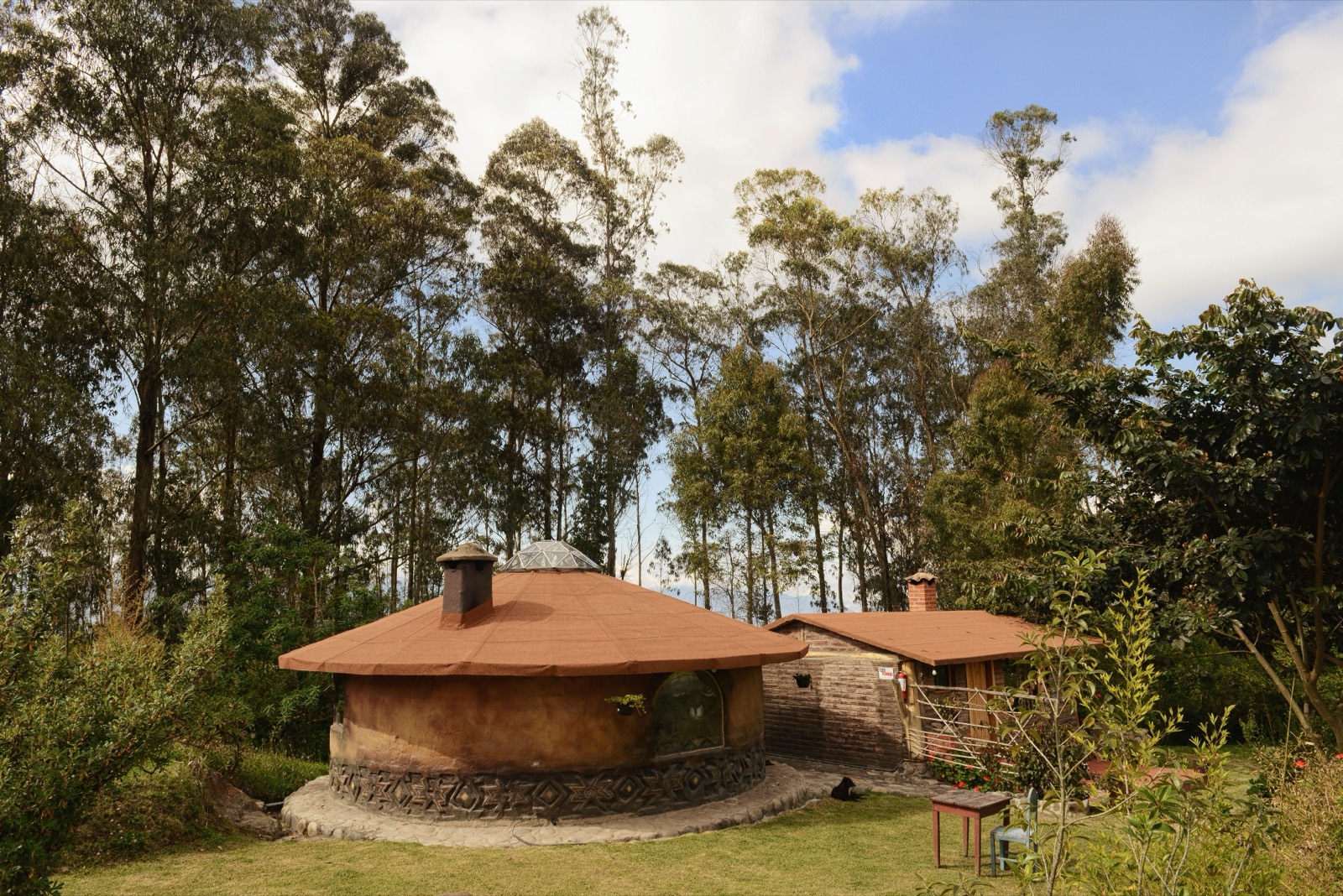
- Not a wall system, a whole closed-loop dwelling: rammed-tire thermal mass, a solar greenhouse, catchment water, greywater planters and off-grid power.
- Professionally built in 2026 runs $300–$450 per sq ft. Earthship Biotecture's own turnkey figure is $180–$220. Determined owner-builders reach $120–$200.
- Utilities can drop to under $300 a year. Against $150,000 of off-grid systems, payback is 20 to 25 years.
- Earthships resell around $191 per sq ft, which on a typical model is a loss of roughly $58,000 against build cost.
- Tropical ones exist — Belize and Nicaragua both have them — and what the builders had to change is the most useful part of this page.
An earthship is not a building method, it is a complete self-sufficiency system that happens to have walls. Old tires rammed with earth form a thermal battery, a sloped glass front heats the house and grows food, panels make power, and rain is caught, stored and cycled through the planters. Michael Reynolds' concept is the most ambitious idea in natural building, the most labour-punishing, and the one with the widest gap between the brochure and the bank statement.
How the system works
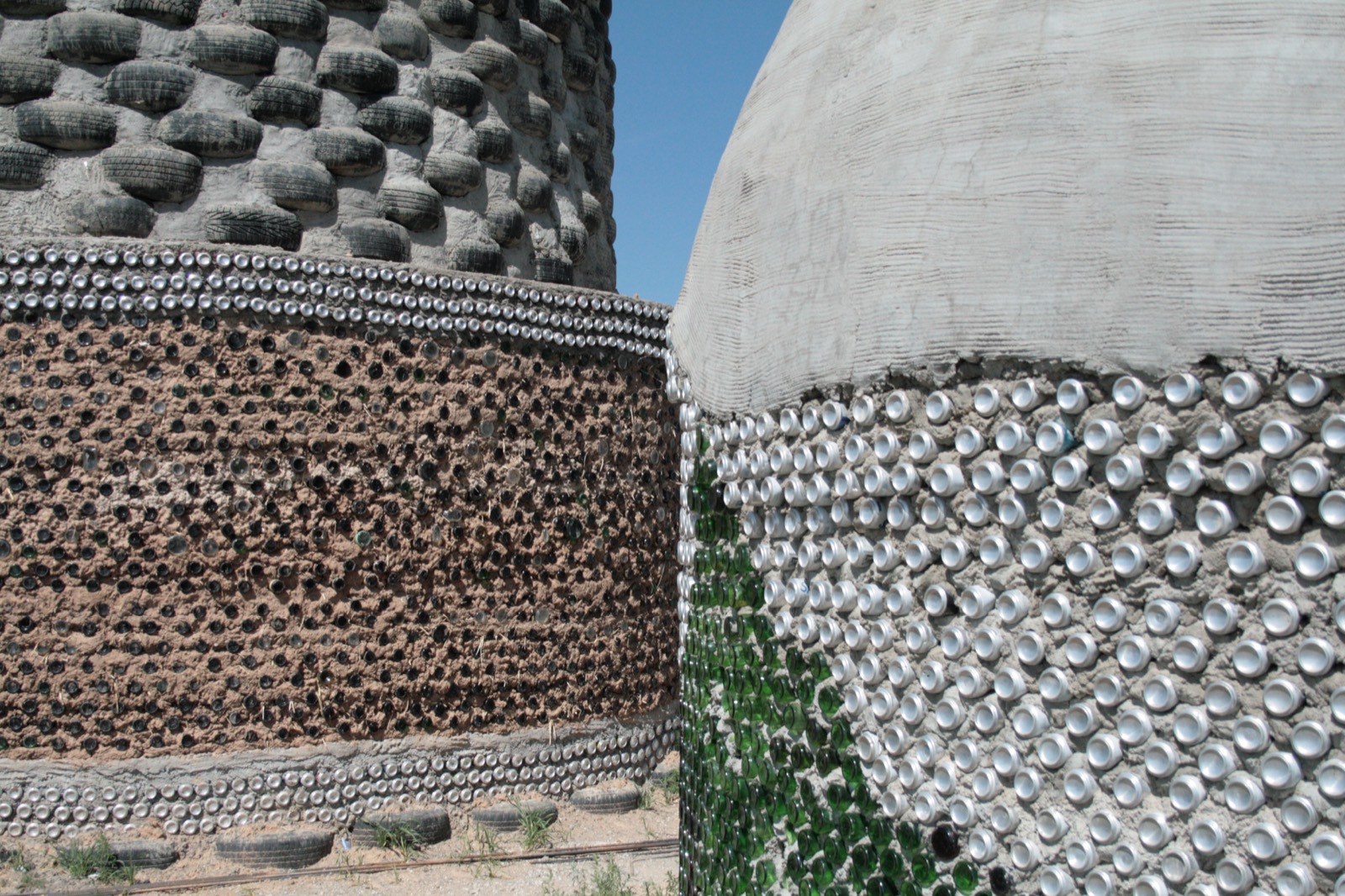
The back and side walls are tires rammed full of earth, usually bermed into a hillside. The material is free, the mass is enormous, and the labour is the price you pay for both. Interior walls use bottles and cans set in cob.
The front is a sloped glass face angled to catch low winter sun, with a greenhouse strip inside it. Behind that sit the systems that make the whole thing a machine rather than a house: photovoltaics, rainwater catchment and cisterns, greywater routed through planting beds, and blackwater treatment outside.
Nothing here is optional decoration. Remove the systems and you have an expensive earth-bermed house. The systems are the point, and they are also most of the budget.
What one actually costs
Published figures disagree wildly, and the reason is that they describe different deals.
Independent 2026 estimates put professionally built earthships at $300 to $450 per square foot, which lands a 1,500 to 2,000 sq ft home somewhere between $450,000 and $900,000. Earthship Biotecture quotes lower for its own turnkey work: Reynolds has put it at $180 to $220 per square foot, with a standard Taos build near $225.
Owner-builders doing the labour themselves and scavenging materials get to $120 to $200 per square foot, roughly $180,000 to $400,000 for a 2,000 sq ft home. Tires are free from tire shops, the earth is under your feet, and bottles and cans cost nothing. What you spend instead is months of your life.
Real listings in the Greater World community outside Taos — the world's largest off-grid legal subdivision, 630 acres platted for 130 homes with about 60 built — give honest market anchors. A 1,600 sq ft REFUGE model on three acres was listed at $550,000, about $344 per sq ft. A 2,600 sq ft home on three acres listed at $800,000, with roughly $200,000 of repairs flagged as needed.
The operating side is where earthships genuinely deliver. A well-documented Taos earthship reports annual utility costs under $200 to $300, against $2,000 to $3,000 for a comparable conventional home. Do the arithmetic honestly, though: spend $150,000 extra on off-grid systems to save $2,000 to $2,500 a year and payback runs 20 to 25 years.
The resale problem
This is the number that almost never appears in earthship writing, and it deserves its own section.
Earthships resell at an average of about $191 per square foot. That is well below what most of them cost to build. Run it on a 1,700 sq ft Global Model and the gap is stark.
The honest reading: an earthship is a fantastic house to live in and a poor asset to sell. If you build one with your own hands, the sweat is the investment and this chart barely matters. If you write cheques for it, expect the market to value it as an unusual house rather than as a machine.
Weighed up
| Factor | Rating | Notes |
|---|---|---|
| Owner-built cost | 🟡 | $120–$200/sq ft, paid mostly in months of your life |
| Professional cost | 🔴 | $300–$450/sq ft once systems and finishes are counted |
| Running cost | 🟢 | Utilities under $300 a year in a documented Taos home |
| Payback on systems | 🟡 | Roughly 20–25 years at typical savings |
| Resale | 🔴 | Averages $191/sq ft, often below build cost |
| Self-sufficiency | 🟢 | Power, water, waste and some food. Genuinely unmatched |
| Sustainability | 🟢 | Reused materials and closed loops throughout |
| Build speed | 🔴 | Hand-ramming tires is as slow as construction gets |
| Desert fit | 🟢 | Exactly what it was designed for |
| Humid tropical fit | 🟡 | Works, but needs genuine redesign, not a copy |
| Permitting & finance | 🔴 | Real code battles, and mortgages are hard to place |
Tropical earthships, for real
The usual line is that earthships are a high-desert idea. True, but two have been built in this region, and what their builders had to change is more instructive than any theory.
Belize. The country's only earthship sits beside the Lubaantun Maya site in Toledo District, built as a retrofit on the foundation of an old barn. Reynolds' team came down to demonstrate orientation for cooling, heating and catchment, ran a roughly four-week build with ten apprentices, and trained a Maya crew from the nearby village of San Pedro Colombia who did most of the work. The base is stacked tires stuffed with styrofoam and crushed cans. The team then took the tire and bottle-brick methods to a rainwater catchment system for the village school.
Nicaragua. Casa Llanta — tire house — went up in 2009 near San Juan del Sur, built by a group of expat Californians. The logic there is worth borrowing: water access is limited, energy is very expensive, and long blackouts are routine. The home is built into the earth for temperature stability, with a large catchment system banking wet-season rain for the dry months. The builders worked alongside Nicaraguans to pass the techniques on.
What actually breaks. A builder in Cayo, Belize abandoned the classic cooling tubes entirely because the drill could not get through quartz veins in the hillside. They went to aircrete instead, and reported that a four-inch aircrete roof slab kept corrugated metal roofing below 80°F even after a day over 100°F. Others cite cooling tubes as a maintenance and vermin problem in the tropics, which is a fair concern for a buried duct in a warm, wet place.
The single most transferable adaptation: separate the living space from the greenhouse. In a desert you want the glasshouse thermally coupled to the rooms. In the tropics that same coupling cooks you, and a buffer between the two lets you keep the food and the water harvesting without importing the heat.
Can you actually build it?
Yes, if you are the right kind of stubborn. There is a real community and a training programme, and owner-builders finish these all the time.
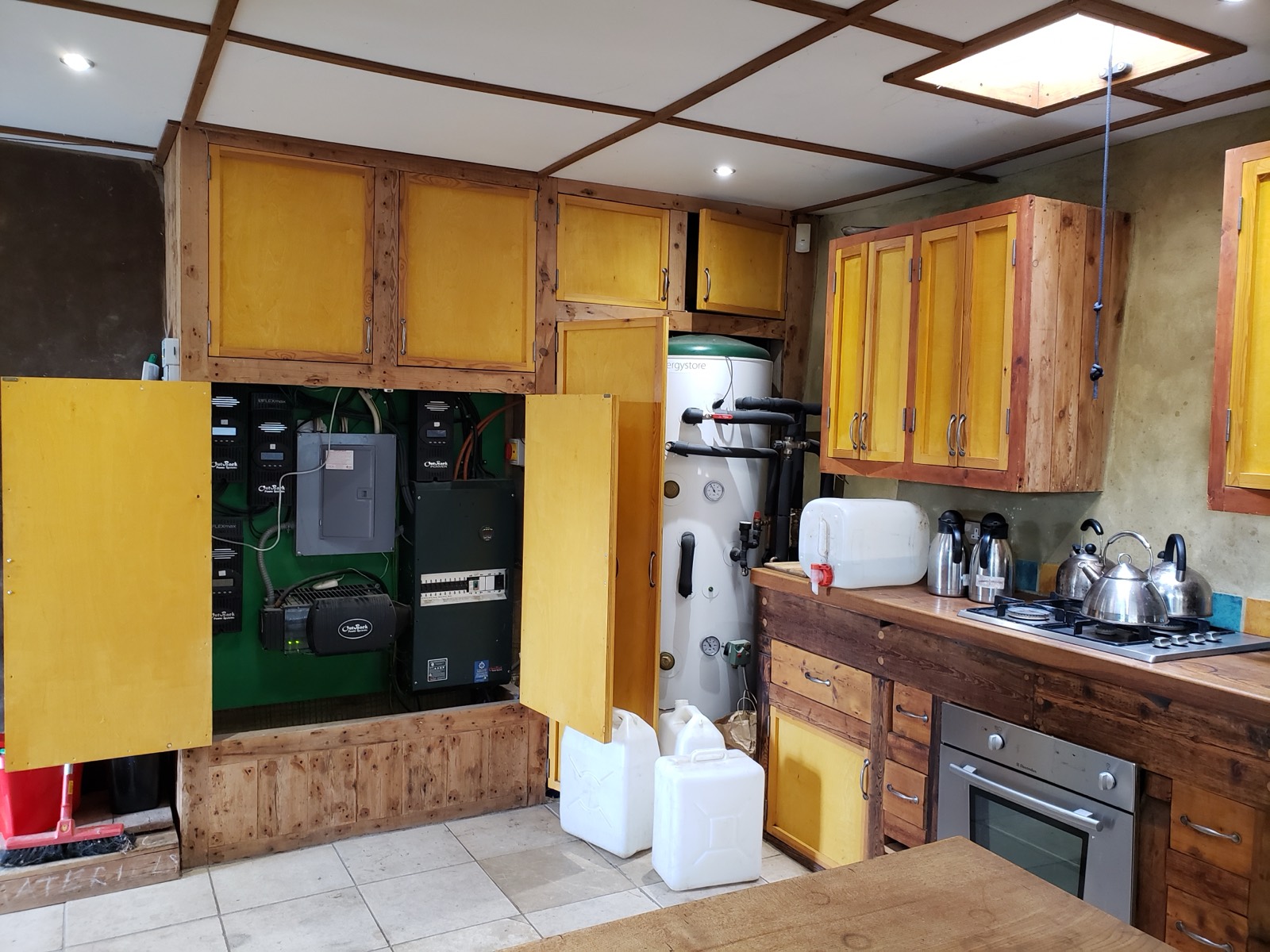
Be clear about what you are signing up for. Hand-ramming hundreds of tires is the definition of sweat equity, and the integrated systems — solar, catchment, greywater, blackwater — require genuine technical competence, not enthusiasm. You are becoming the utility company for your own house.
The design fit matters too. Earthships were optimised for high desert, where huge day-night swings give thermal mass something to smooth out. In the humid tropics the swing is small, so the mass advantage shrinks, the greenhouse wants to overheat, and moisture management gets harder. A tropical earthship is a redesign, not a copy-paste, and the Belize and Nicaragua projects above are the evidence for both halves of that sentence.
And then the paperwork, which is usually the hardest part of all. Permitting a tire home, insuring it, and financing it are three separate fights in most jurisdictions, and in Panama or Costa Rica you would be the first case your bank has seen. If the appeal is off-grid independence rather than the tire walls specifically, you can get most of the way there — solar, catchment, greywater — on a conventionally built house that appraises normally. Compare it against the other methods before you commit to the hardest one.
Want off-grid independence without the tire walls?
Solar, rainwater catchment and greywater systems all bolt onto a conventionally built tropical home — one your bank will lend against and your insurer will cover. We can price the independence you actually want.
See real 2026 build costs →Frequently asked questions
How much does an earthship cost to build?
Professionally built in 2026, roughly $300 to $450 per square foot, which puts a 1,500 to 2,000 sq ft home between $450,000 and $900,000. Earthship Biotecture quotes $180 to $220 for its own turnkey work. Determined owner-builders reach $120 to $200 per square foot by supplying the labour themselves.
Do earthships save money in the long run?
On running costs, dramatically. A documented Taos earthship reports annual utility bills under $200 to $300 against $2,000 to $3,000 for a conventional home. But if the off-grid systems added $150,000 to the build, payback on that spend runs 20 to 25 years, so treat it as buying independence rather than buying savings.
What do earthships sell for?
An average of about $191 per square foot, which is frequently below what they cost to build. On a 1,700 sq ft Global Model, that is roughly $382,500 to build against $324,700 on resale, a gap near $58,000. If you built it with your own hands the maths looks very different, but a cheque-written earthship is a poor asset.
Have earthships been built in the tropics?
Yes. Belize has one beside the Lubaantun Maya site in Toledo District, a retrofit built with a local Maya crew trained by Reynolds’ team. Nicaragua has Casa Llanta near San Juan del Sur, built in 2009, where limited water and expensive, unreliable power made the case. Both required real adaptation rather than a straight copy of the desert model.
What has to change for a tropical earthship?
Chiefly, separate the living space from the greenhouse so its heat does not flow into your rooms. Cooling tubes are also unreliable here: one Belize builder abandoned them when the drill could not penetrate quartz veins, and buried ducts invite vermin in warm wet ground. Expect to solve shading, cross-ventilation and moisture properly, since the small day-night swing gives thermal mass much less to work with.
Sources & verification
Figures in this guide were checked against primary and authoritative sources on 6 September 2026. Immigration, tax, and cost figures change — always confirm the current rules with the official body or a licensed professional before acting.
- Earthship Biotecture — models, turnkey pricing and homes for sale
- Explore Tiny House — 2026 earthship cost and resale analysis
- Belize Hub — building Belize’s first earthship at Lubaantun
- Permies — builders on passive cooling and abandoned cooling tubes in Belize