ICF (Insulated Concrete Forms)
Foam blocks stacked like giant Lego, filled with reinforced concrete. It is the closest thing the building world has to a house that ignores the weather.
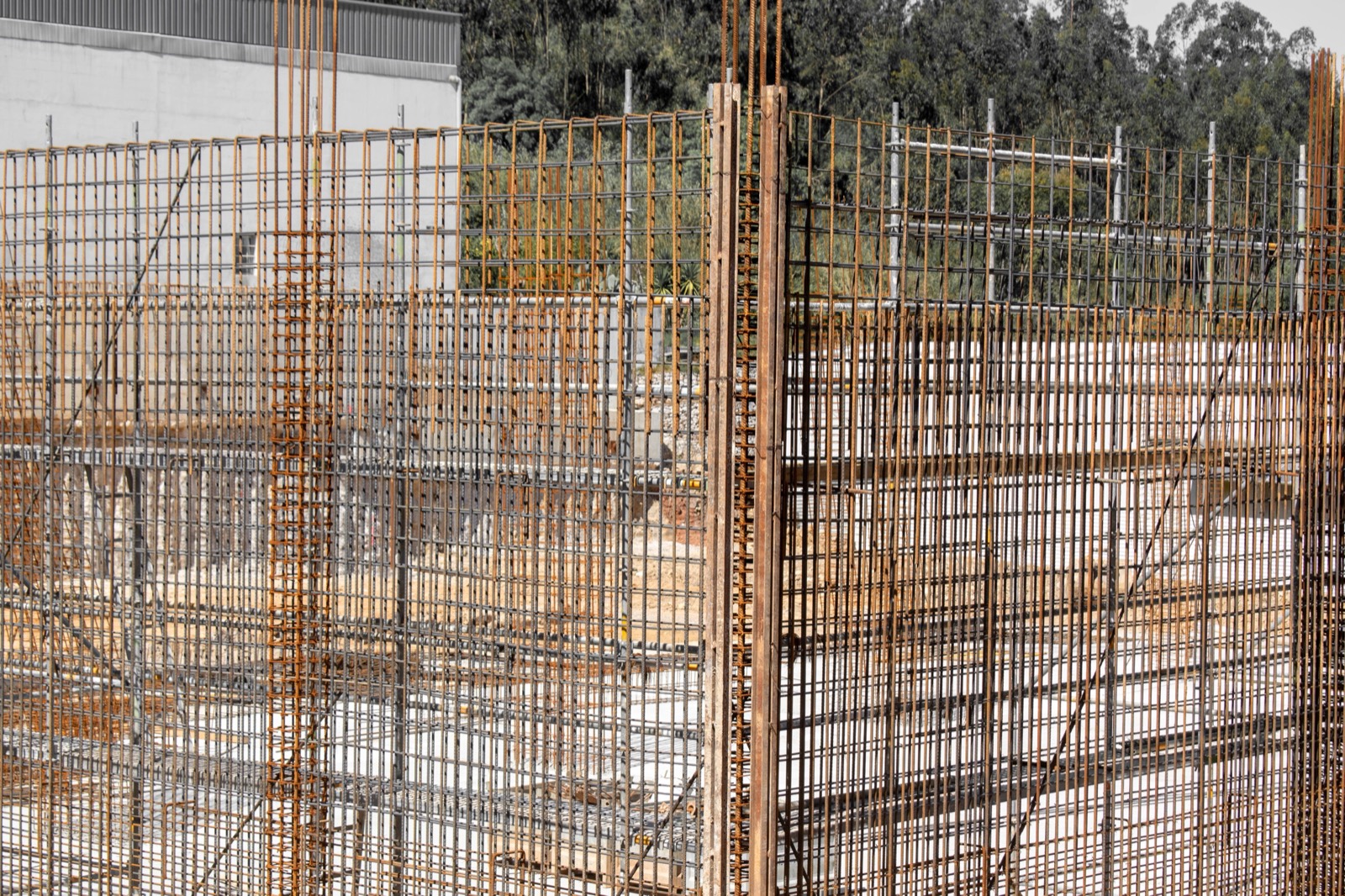
- An ICF wall is reinforced concrete with permanent foam insulation on both faces. You get storm resistance and a cool interior from the same wall.
- Expect to pay roughly 5 to 15% more than block or stick-frame up front.
- ICF walls are engineered for 200 mph and above. Wood frame starts failing around 130 to 150 mph, which is inside Category 5 territory.
- Owners typically report 30 to 50% lower cooling bills, and insurers in storm markets often discount the premium heavily.
- For Panama and Costa Rica it is the natural upgrade from the region's concrete-block default, not an exotic experiment.
ICF stacks hollow interlocking foam blocks, adds rebar, and fills the cavity with concrete. What you end up with is a monolithic concrete wall wearing a permanent insulation jacket. In a climate that is hot most days and occasionally tries to remove your roof, that combination is hard to beat.
How it comes together
Expanded-polystyrene forms lock together into walls. A crew threads rebar through the cavity. Then the concrete truck arrives and the whole thing becomes one continuous pour.
The foam never comes off. It stays as insulation on both faces of the wall, inside and out, with no thermal bridge running through it. Forms go up fast, and the finished wall is airtight, quiet enough to change how a house feels, and strong in a way that is hard to appreciate until you have seen what happens next.
The house that stayed
In October 2018, Hurricane Michael came ashore at Mexico Beach, Florida. It flattened the town.
One house did not go. Aerial photographs afterwards showed an ICF home standing nearly intact on a beachfront reduced to slabs and splinters. It has been the industry's calling card ever since, and for once the marketing is pointing at something real.
The engineering behind that photograph is unromantic. Wood-frame walls in most of the world are designed to a code minimum of roughly 90 to 130 mph. IBHS testing shows them beginning to fail between 130 and 150 mph. ICF walls are engineered and tested past 200 mph, and reinforced concrete masonry has held above 250.
Category 5 begins at 157 mph. That single number sits in the gap between the two systems, which is the entire argument for ICF in a hurricane belt.
What ICF runs in 2026
Current US pricing lands between $140 and $220 per square foot of finished living space, depending on who you ask and what they include. Against comparable stick-frame at $160 to $200, that works out to a premium of roughly 5 to 15%. On a $400,000 build, call it $20,000 to $60,000.
Two things claw that back. Cooling bills typically drop 30 to 50%, which in a climate where the air conditioning runs eleven months a year is not a rounding error. And insurers pay attention: in storm-exposed US markets, moving from frame to concrete construction has been reported to cut premiums by 25 to 45%.
One caution before you build a spreadsheet on those numbers. A large share of the published ICF savings figures come from companies that sell ICF. Treat them as the optimistic end and get local bids, especially in Panama, where the block-and-mortar default is genuinely cheap and the ICF supply chain is thinner. Our 2026 Panama build cost guide has the local baseline to measure against.
The good and the bad
| Factor | Rating | Notes |
|---|---|---|
| Cost | 🟡 | ~5–10% over block upfront; cheaper to run |
| Lifespan | 🟢 | Concrete core; decades |
| Build speed | 🟢 | Forms stack fast |
| DIY-friendly | 🟡 | Doable but concrete pour needs a crew |
| Heat/climate fit | 🟢 | Insulated concrete = cool interiors, low AC |
| Moisture/termite | 🟢 | Concrete + foam resist both (detail the foam) |
| Seismic/wind | 🟢 | Excellent, monolithic reinforced concrete |
| Permitting/finance | 🟢 | Concrete; codes and banks are comfortable |
Will it hold up in Panama or Costa Rica?
Better than almost anything else you could choose. This is the one alternative method we recommend without a list of caveats attached.
The region already builds in reinforced concrete block, so nobody has to be talked into concrete. ICF is that same instinct done properly: the structure gets stronger, and the wall finally gets the insulation that bare block has never had. If you have spent a night in a block house in Bocas or David, you know the problem. The wall soaks up sun all afternoon and hands it back to you at midnight.
Two local details worth knowing. Termites cannot eat foam, but they will happily tunnel through it to reach anything wooden, so the foam needs terminating properly at grade and a treated barrier underneath. And EPS degrades in ultraviolet light, so any exposed foam has to be rendered or clad, not left bare through a Panamanian dry season.
Against the region's alternatives, ICF sits at the sensible end. If you are still comparing methods, the full index covers all of them, and 3D-printed concrete is the other end of the same material family.
Worth the ICF premium on your plot?
Sometimes yes, sometimes the money is better spent on the roof and the windows. Send us the plot and the plan and we will price ICF against standard reinforced block, line by line, and tell you which one we would build.
Compare against 2026 block costs →Frequently asked questions
Is ICF more expensive than concrete block?
Yes, by roughly 5 to 15% up front. You get that back over time through lower cooling bills, lower insurance in storm markets, and near-zero losses to wind, termites and fire. Whether the payback period suits you depends on how long you plan to own the house.
Is ICF good for hot climates?
It is one of the best options available. The concrete core gives you thermal mass and the permanent foam gives you insulation, so the wall stops handing you back the afternoon's heat at bedtime. Owners commonly report cooling costs 30 to 50% below a comparable uninsulated block house.
How does ICF handle hurricanes and earthquakes?
ICF walls are engineered past 200 mph, well beyond the 157 mph where Category 5 begins. Wood frame starts failing at 130 to 150. In seismic zones a monolithic reinforced-concrete wall performs well when properly engineered, which is the same reason the region already builds in concrete.
Do termites attack ICF?
They cannot eat the foam, but they will tunnel through it to reach wood above. The fix is detailing rather than chemistry: terminate the foam correctly at grade, run a physical or treated barrier under the slab, and keep a visible inspection gap. Any competent tropical builder will know this.
Sources and verification
Figures checked against industry and testing sources on 3 September 2026. Construction pricing moves with materials and labour markets, and many published ICF savings figures come from ICF vendors. Get local bids before committing.
- HomeGuide — 2026 ICF and concrete house cost survey
- US HUD — costs and benefits of insulating concrete forms
- IBHS — wall system wind-failure testing
- Insurance Journal — concrete walls and hurricane-resistant homes