Barndominiums
A steel post-frame shell wrapped around wide-open living space, and the fastest-growing home style in rural America. Cheap, huge, and quick to build. The tropical catch is heat and the metal skin.
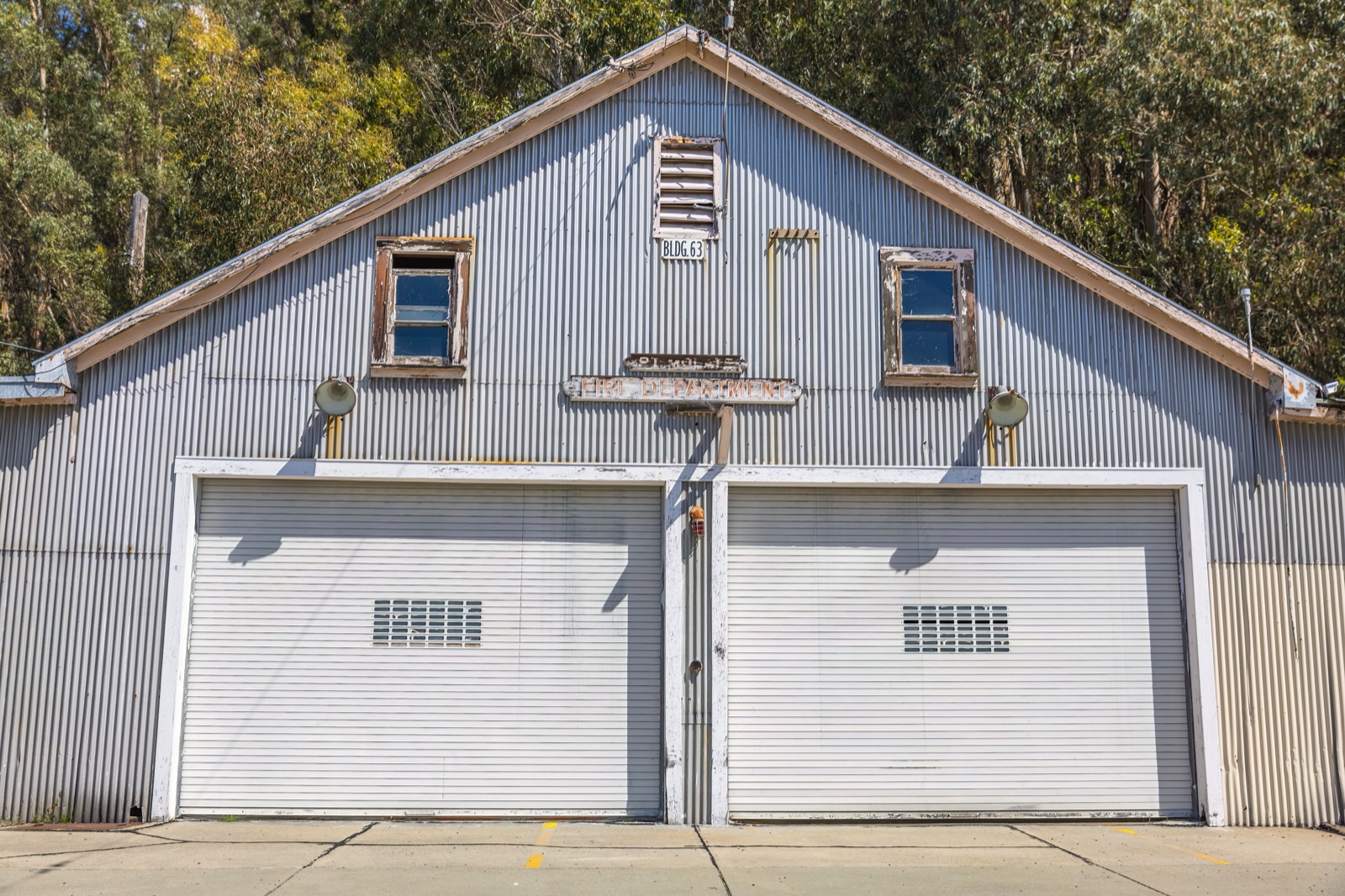
- A home built inside a post-frame or steel shell. Big posts, engineered trusses clear-spanning the full width, no interior load-bearing walls at all.
- The shell erected runs $45–$65 per sq ft. Turnkey runs $110–$180. Treat any shell quote as roughly one third of what you will spend.
- A pro crew stands the shell in one to three weeks. Interior build-out then takes two to four months and eats most of the budget.
- The thing that kills these deals is not construction. It is the appraisal, because there are no comparable sales.
- In Panama or Costa Rica, that appraisal problem is not smaller. It is total.
A barndominium is a house built inside the same efficient shell as a modern barn or workshop: big posts, engineered trusses, a metal skin, and a wide open interior with nothing structural in the middle of it. It is the fastest-growing rural home style in America, and the pitch is genuinely good — a lot of house per dollar. The trouble is that almost every cost figure you will read describes a different project than the one you are imagining.
How a barndo goes up
Instead of framing stud by stud, post-frame construction sets large posts on piers or a slab and lands engineered trusses across the full width. Nothing inside carries load. You can put walls wherever you like, or nowhere.
The shell gets wrapped in metal panels, roof and usually walls, then insulated and finished inside like any home. Because the structure is simple and repetitive, a professional crew can stand it in one to three weeks, which is dramatically faster than conventional framing.
Then the clock changes gear. Interior build-out typically takes two to four months. That asymmetry is the whole barndominium story in one sentence.
The number that isn't the number
The reason barndominium quotes range from $85 to $180 per square foot is not steel prices or wind loads. It is that people are pricing different things and calling both of them a house.
A shell gets you the engineered foundation or slab, the frame, metal roofing and siding, and exterior doors and windows. That is a large, secure, empty building. Materials-only kits run $20–$35 per sq ft; a shell delivered and erected is $45–$65.
What a shell does not include: insulation, interior walls, wiring, plumbing, HVAC, kitchen, bathrooms, or floors. Everything you actually live with.
On a 2,400 sq ft home the gap between a finished shell and a finished house is roughly $200,000 to $400,000 of interior labour and materials. That is not a detail you discover later.
Turnkey pricing lands where you would expect once you know that. National standard builds are $65–$160 per sq ft. A full-service contractor with mid-grade finishes is $120–$175. Texas typically runs $160–$180, and premium work goes past $225.
Two things worth knowing before you budget. Land and site work are routinely underestimated and can add $30,000 to $100,000 before anyone builds anything. And acting as your own general contractor for the interior saves roughly 10 to 20%, which on a barndo is a large number, because the interior is most of the job.
Barndominiums, rated
| Factor | Rating | Notes |
|---|---|---|
| Shell cost | 🟢 | $45–$65/sq ft erected. Genuinely cheap for the volume |
| Finished cost | 🟡 | $110–$180/sq ft. Competitive, not miraculous |
| Shell speed | 🟢 | One to three weeks for a professional crew |
| Open space | 🟢 | Clear spans and no interior load walls, ever |
| DIY-friendly | 🟢 | Finishing it yourself saves 10–20% and is genuinely doable |
| Heat | 🔴 | A metal skin near the equator is a solar collector |
| Termites | 🟢 | Steel post-frame gives termites nothing to work with |
| Damp at the base | 🟡 | Post-to-ground detailing is where post-frame fails |
| Wind | 🟢 | Engineered post-frame handles wind loads well |
| Appraisal & finance | 🔴 | No comparable sales means no valuation, and no valuation means no loan |
| Regional familiarity | 🔴 | Well understood in the US. Essentially unknown in Latin America |
The appraisal problem
This is where barndominium deals actually die, and it has nothing to do with the building.
An appraiser values a home mostly by comparable sales — similar houses nearby that sold recently. Barndominiums are unusual, and they cluster in rural areas where recent sales of anything are thin. So the appraiser goes looking for comps and finds none.
Two bad outcomes follow. The valuation can come in below what you are building, and a lender cannot approve you for more than the house is worth. Or the appraiser can be unable to issue a usable report at all, at which point the lender simply declines.
There are workarounds. Appraisers widen the search area, use homes of similar age, size and quality, or lean on older sales and adjust. Fannie Mae and Freddie Mac both permit conventional loans on barndominiums, and construction-to-permanent is the standard path. But the practical requirement is a lender who has done one before, which usually means a local bank or a farm credit union rather than a national brand.
You can also de-risk the file yourself. Make sure the property is classified single-family residential, not agricultural or commercial — a dual-use barndo can be underwritten as a commercial property. Put it on a permanent foundation to code. Have working plumbing, electrical, heating and water. Keep the plans, permits, certificate of occupancy and tax classification together in one folder before anyone asks.
Building one down here
Post-frame is one of the simpler shells to erect, and that part would travel fine. The rest of it does not travel well at all.
Crews in Panama and Costa Rica build in concrete. That is not stubbornness; it is what the climate, the termites and the local supply chain reward. Bringing in a steel post-frame system means importing the kit, the detailing knowledge and often the crew, and paying for all three.
Then the metal skin. A steel roof and steel walls in direct equatorial sun is the same physics problem as a bare tin roof or a shipping container, and the fix is the same: attack solar gain from the outside with reflective coatings and a ventilated cavity before you spend on insulation inside. Skip that and you have built a very large, very open oven.
And the appraisal issue, which is bad in rural Texas, is worse here. A bank in David or Panama City has almost certainly never valued a barndominium, because there are almost none to compare it to. That affects your mortgage, your insurance and eventually your resale, and none of those problems have a construction solution.
Our honest read: the barndo's cost-and-space maths is genuinely attractive and the open clear-span interior is a real pleasure to live in. But in this region you would be paying an import premium for an unfamiliar system, solving a heat problem the local default does not have, and financing it against nothing. If what you love is the wide open span and the industrial look, that is achievable in concrete and steel here without the valuation problem. Start with the method comparison.
Want the big open span without the appraisal headache?
Clear-span interiors and industrial volume are perfectly buildable here in systems local banks already know how to value. We can price the look you want against a structure that appraises, insures and resells normally.
See real 2026 build costs →Frequently asked questions
Are barndominiums cheaper than a regular house?
The shell is. The house is only somewhat. A shell delivered and erected runs $45 to $65 per square foot, but turnkey lands at $110 to $180, which is competitive with conventional construction rather than revolutionary. Most of the saving is in the structure, and most of the budget is in the interior.
What does a shell quote actually include?
The engineered foundation or slab, the frame, metal roofing and siding, and exterior doors and windows. It excludes insulation, interior walls, wiring, plumbing, HVAC, kitchen, bathrooms and flooring. Treat any shell number as roughly one third of what you will end up spending.
Why are barndominiums hard to finance?
The appraisal. Valuers work from comparable sales, and there are few recent barndominium sales in most markets, especially rural ones. The value can come in low, or the appraiser may be unable to issue a report at all, and the lender then declines. Fannie Mae and Freddie Mac do permit conventional loans, but you need a lender who has closed one before.
Do barndominiums work in hot climates?
Only if you solve solar gain from the outside first. The metal roof and walls absorb and re-radiate heat, so reflective coatings and a ventilated cavity matter more than the R-value you add inside. Without that, a barndominium near the equator is uncomfortably hot no matter how much insulation you buy.
Can you build a barndominium in Panama or Costa Rica?
You can, but it is uncommon and the friction is real. Local crews build in concrete, so you would import the kit and the know-how, you would have to engineer around the metal-skin heat problem, and local banks have essentially no comparable sales to value it against. That last point affects financing, insurance and resale all at once.
Sources & verification
Figures in this guide were checked against primary and authoritative sources on 6 September 2026. Immigration, tax, and cost figures change — always confirm the current rules with the official body or a licensed professional before acting.
- HomeCostLab — 2026 barndominium cost guide, shell and turnkey
- Barndo Plans — shell vs turnkey cost breakdown
- KW Appraisal Group — barndominium appraisal and financing
- Fairway — mortgage paths and the comparable-sales problem