Asphalt Shingles
North America's default roof: cheap, familiar, fast. If you're building in the tropics, they're usually the wrong pick. Sun and heat cook them, humidity grows algae, and hurricanes lift them. Here's the case, both ways.
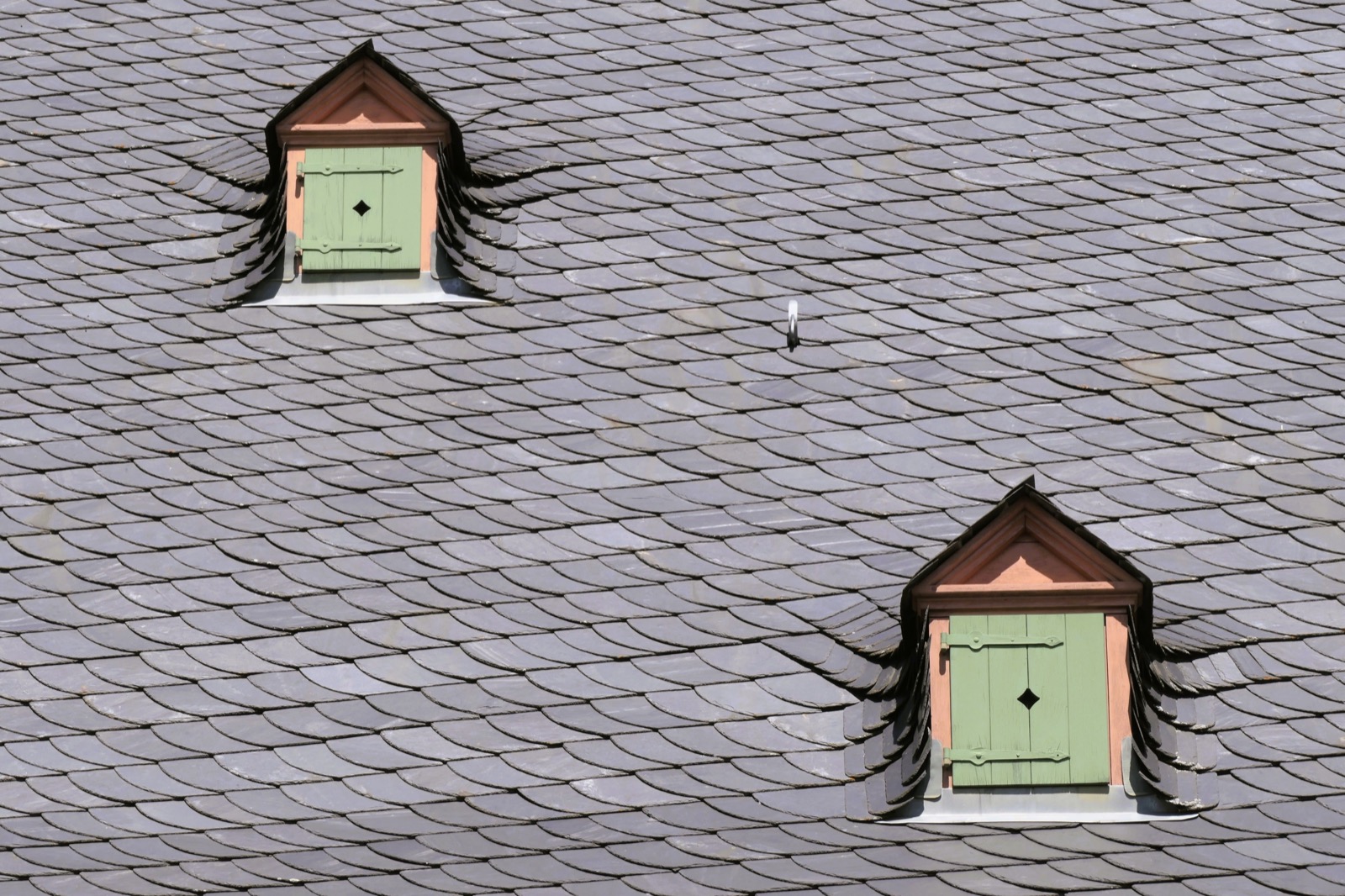
- The cheapest roof to buy: $3.43–$4.65 per sq ft for three-tab, $3.50–$12 for architectural.
- Wind ratings look fine on paper — 130 mph for architectural. That rating depends on a glue strip, and glue is what the tropics attack.
- A partly sealed shingle catches more wind than the test standard assumes. Post-hurricane forensics found failures lined up with exactly those spots.
- Rated 15 to 30 years. In tropical heat and UV you should plan for the bottom of that.
- If budget forces asphalt, impact-rated architectural at $5–$9 per sq ft is the honest compromise. Never three-tab.
Asphalt shingles cover most of North America and almost none of the tropics, and there is a reason for that beyond fashion. The material is cheap, fast and forgiving, and any roofer alive can lay it. But the way it holds itself down in wind depends on something that heat and ultraviolet light take apart, which makes it the one common roof whose weakness is specific to where you are building.
How shingles go on
Overlapping strips nailed to a decked roof, each course covering the nails of the one below. Water runs down the face and off. It is a shedding system, not a sealed one, and it works well when the geometry is simple and the wind is ordinary.
Under each shingle is a strip of factory adhesive. When the roof heats up, that strip softens and bonds the tab to the course beneath. That bond is what stops wind lifting the tab, and it is the entire basis of the wind rating on the packet.
What shingles cost
Basic three-tab runs $3.43 to $4.65 per square foot installed. Architectural, the thicker laminated kind, spans $3.50 to $12 depending on grade. Put that on a 2,000 sq ft roof and you are looking at roughly $5,800 to $14,500.
Nothing else on this site is cheaper to install. Whether you spend less owning it is a different question, and the answer in this climate is usually no.
The glue problem
Here is the mechanism nobody selling shingles explains, and it is worth understanding before you spend money.
The adhesive strip needs warmth to bond, and then it needs to stay bonded for decades while sitting in the sun. Tropical UV and daily thermal cycling degrade it. Shingles do not usually come unstuck all at once — they come partly unstuck, in patches, invisibly.
And a partly sealed shingle is worse for you than it sounds. The free portion of the tab lifts in wind and presents a vertical face, which generates far more uplift force than the fully sealed shingle the ASTM test standard is built around. In other words, the roof stops matching the assumptions behind its own rating.
This is not theory. Forensic surveys after hurricanes and tornadoes found that the pattern of blow-off lined up with the locations of partially unsealed shingles.
Read the top bar against the shaded bands and you will see it: a three-tab roof is rated below a Category 1 hurricane. And these are the ratings for shingles whose adhesive is still doing its job.
Shingles, rated
| Factor | Rating | Notes |
|---|---|---|
| Upfront cost | 🟢 | Cheapest installed roof there is |
| Availability of labour | 🟢 | Any roofing crew can lay it competently |
| Complex roof shapes | 🟢 | Handles valleys, dormers and hips easily |
| Lifespan here | 🔴 | 15–30 years, skewing low under tropical UV |
| Wind | 🔴 | 130 mph at best, and only while the adhesive holds |
| Heat & UV | 🔴 | Attacks the exact bond the wind rating depends on |
| Seams | 🟡 | Thousands of nail holes and laps, all shedding rather than sealed |
| Lifetime cost | 🔴 | Buy it three times over fifty years and metal was cheaper |
Easy to lay, hard to justify
None of this makes asphalt a bad product. In Ohio it is the sensible default. The problem is that its failure mode and your climate are aimed at each other.
If your budget only reaches asphalt, do three things. Buy impact-rated architectural shingles at $5 to $9 per sq ft rather than three-tab, which is rated below a Category 1 hurricane. Insist on a six-nail pattern rather than four, with enhanced sealant strips. And spend on the underlayment and a sealed roof deck, because modern hurricane standards focus there rather than on the surface material, and a well-sealed deck under a cheap roof beats the reverse.
If your budget reaches further, standing seam holds 180 mph and lasts 40 to 70 years, and corrugated metal costs about the same as good shingles while outlasting them.
Not sure whether to spend on the roof or somewhere else?
SORA builds fixed-price homes for foreign buyers in Panama and Costa Rica. We will tell you plainly when a cheaper roof is fine and when it is the line item that comes back to bite you.
See 2026 build costs →Frequently asked questions
Why do shingles fail faster in the tropics?
Because their wind resistance depends on a strip of adhesive that heat activates and ultraviolet light degrades. Over years of tropical sun and daily thermal cycling the bond breaks down in patches. The shingle looks fine from the ground while the thing holding it down has quietly stopped working.
What is wrong with a partly sealed shingle?
It performs worse than the rating predicts. The unsealed part of the tab deflects upward in wind and presents a vertical face, generating far more uplift than the fully sealed shingle the test standard assumes. Surveys after hurricanes found blow-off patterns matching the locations of partially unsealed shingles.
What does an asphalt roof cost?
Three-tab runs $3.43 to $4.65 per square foot installed and architectural $3.50 to $12 depending on grade. On a 2,000 square foot roof that is roughly $5,800 to $14,500. It is the cheapest roof you can buy and rarely the cheapest to own in this climate.
If I have to use shingles, what should I specify?
Impact-rated architectural shingles at $5 to $9 per square foot, never three-tab. A six-nail pattern rather than four, with enhanced sealant strips. And spend properly on underlayment and a sealed roof deck, since that is where modern hurricane standards put the emphasis.
How long will they last here?
The published range is 15 to 30 years. In tropical heat and UV, plan for the low end, and treat anything past twenty as a gift.
Sources & verification
Figures in this guide were checked against primary and authoritative sources on 7 September 2026. Immigration, tax, and cost figures change — always confirm the current rules with the official body or a licensed professional before acting.
- This Old House — 2026 roof cost guide by material
- Weather Shield — roofing materials ranked by wind speed, 2026
- Roof Insider — hurricane-resistant materials and sealant failure modes