Tiny Homes
Whole homes under about 40m², on wheels or on a foundation. Cheap to build and run, and a natural fit for the tropics as a casita, rental, or first structure on your land. The problem is legality.
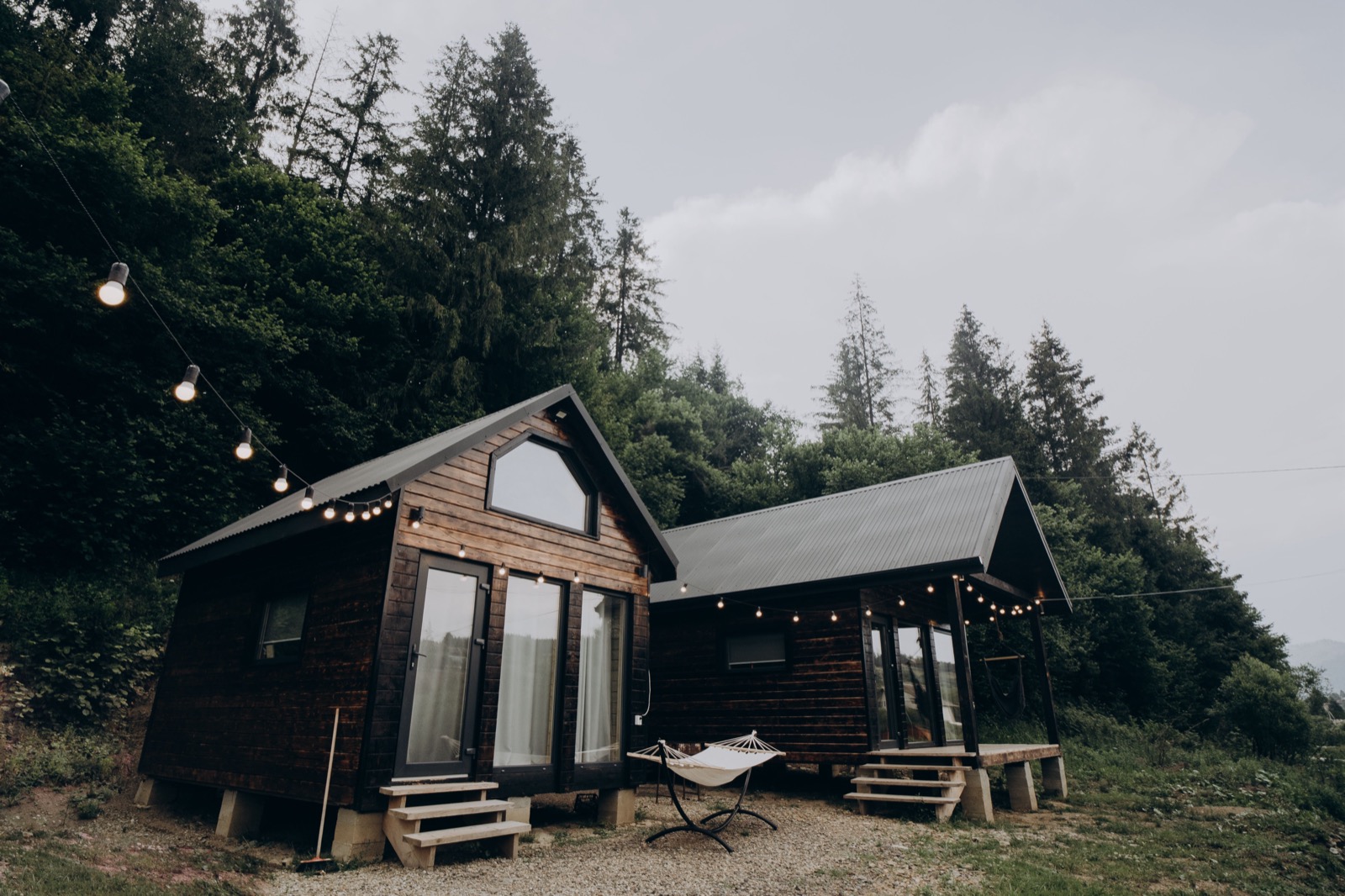
- Tiny homes cost more per square foot than normal houses — $300–$400 against $150–$200. Kitchens and bathrooms don’t shrink.
- They are still cheaper overall, because there is less of them. Budget $35,000–$95,000 built, with a median around $60,000–$70,000.
- Land is in none of those numbers. Neither is road access, which runs $5,000 for a driveway to $75,000+ on hard terrain.
- The wheels that make it flexible are the same wheels that push you into a 7-year loan at up to 36% instead of a mortgage.
- In Costa Rica you need residential uso de suelo and a construction permit even for something small. Nobody is exempt because it is little.
A tiny home is a complete, self-contained dwelling in a very small footprint — usually under about 40m² (400 sq ft), sometimes far less. The appeal is obvious and mostly real: low total cost, low running cost, and a small mark on the land. What almost nobody explains before you commit is that “cheap” and “cheap per square foot” are opposite things here, and that one early decision quietly determines whether a bank will ever lend against it.
Two kinds of tiny home
This is the fork in the road, and it matters far more than the floor plan.
On wheels. Built on a road-legal trailer chassis, which classifies it as a vehicle rather than a building. That sidesteps a lot of code, keeps it movable, and creates every financing problem below.
On a foundation. A small conventional house, built in block or timber or anything else on this site. Permittable, insurable, financeable, and taxable like any other dwelling.
Both live or die on space design — lofts, fold-away furniture, built-ins. But you should choose the fork on legal grounds, not lifestyle ones.
The price, and the paradox
Here is the thing that catches people out. Tiny homes are expensive per square foot. Around $300–$400, against $150–$200 for conventional construction.
The reason is simple once you see it. A 200 sq ft house still needs a full kitchen, a full bathroom, water, waste and power. Those systems cost what they cost. Shrinking the floor plan removes cheap square footage — bedrooms, hallways — and leaves the expensive parts behind at full price.
Both statements are true at once, which is why tiny-home marketing and tiny-home critics can quote real numbers and reach opposite conclusions.
Real 2026 ranges, by who does the work:
| Route | Cost | Notes |
|---|---|---|
| DIY | $20,000–$60,000 | Your labour is the discount. Months of it |
| Prefab kit or shell | $150–$250/sq ft | Anywhere from an unassembled kit to a finished unit |
| Hybrid | $40,000–$90,000 | Trades for the hard parts, you finish it |
| Turnkey custom | $70,000–$150,000+ | $250–$450/sq ft. Solar and premium finish push past $120k |
Three costs that are in none of those figures. Land. Road access — $5,000 for a simple driveway, past $75,000 across difficult terrain, which is a live number on a tropical hillside lot. And permits, tools, insurance, site prep and off-grid systems, which together add 15–25%. Carry a 10–20% contingency on top.
The wheels problem
This is the section that should decide the fork for you.
Mortgage lenders want a home permanently attached to land, legally classified as real estate, and supported by a standard appraisal. A tiny home on wheels fails all three. And even on a foundation, appraisers work by comparable sales — and custom tiny homes rarely have any nearby. Thin comps mean a low appraisal, a smaller loan, and a gap you cover in cash or walk away from.
Worth knowing: Fannie Mae has no minimum square footage rule outside condos, co-ops and manufactured homes. Nothing in standard underwriting forbids a mortgage on a very small house. The blocker is the appraisal, not the size.
| How you end up paying | Terms |
|---|---|
| Mortgage — foundation, permitted, comparable sales exist | Best terms, 15–30 years |
| Builder financing — home as collateral | 6–15% APR, 5–25 years, 10–20% down |
| RV loan — on wheels, RVIA or NFPA certified | Secured, so better than personal loans |
| Personal loan — the common fallback | 6–36% APR, 1–7 years, up to $100,000 |
Insurance compounds it. Owners often stitch together RV, homeowner and specialty cover, which works fine while you live there and collapses at closing when a buyer needs proof of insurance. And the appraisal problem that blocks your purchase will block your buyer’s too, which is the part people discover at exit rather than entry.
Tiny homes, rated
| Factor | Rating | Notes |
|---|---|---|
| Total cost | 🟢 | $35k–95k built. Genuinely low absolute spend |
| Cost per sq ft | 🔴 | $300–400 against $150–200 conventional |
| Running cost | 🟢 | Cheap to cool, power and maintain |
| Land use | 🟢 | Small footprint. Excellent as a casita or a first build |
| Tropical fit | 🟢 | Easy to shade, cross-ventilate and cool |
| Space | 🔴 | Tight for families, tighter over years |
| Financing on foundation | 🟡 | Possible, but thin comps hurt the appraisal |
| Financing on wheels | 🔴 | Personal loans at up to 36% over 7 years |
| Resale | 🔴 | Your buyer inherits your appraisal problem |
Building one in Costa Rica or Panama
Small does not mean exempt. In Costa Rica the land has to carry residential uso de suelo, and a construction permit is required even for a small house. A mobile unit has to be properly fixed or registered. Each municipality sets its own minimum lot sizes, setbacks and heights through its Regulatory Plan, with INVU approving those rules and stepping in where local ones are absent or contradictory.
On the coast the rules tighten sharply. The first 50 metres from the high tide line is undevelopable, and the following 150 metres is concession land with conditions attached. Foreigners hold the same property rights as Costa Ricans outside those maritime zones. Property tax runs 0.25% of the municipal value.
For Panama, we are not going to invent numbers. Minimum dwelling size and small-structure permitting vary by district and the published guidance is thin. Ask a Panamanian attorney before you budget anything, and do not assume the Costa Rican rules transfer — they do not.
One tip that saves months anywhere: search the municipality’s rules for accessory dwelling unit, minimum dwelling size and manufactured home rather than for “tiny house.” Most regulations never use the phrase while still governing the thing, and a vague question at the counter invites a fast no.
Our honest read: on a foundation, permitted properly, a tiny home is one of the smartest ways to get a livable, legal, financeable structure onto a tropical lot. On wheels it is a lifestyle purchase financed like a jet ski. If the appeal is a small, efficient, well-designed house, look at prefab and modular or a compact ICF build, both of which appraise and insure like normal houses.
Thinking about building in Panama or Costa Rica?
SORA is a fixed-price design-build platform for foreign buyers. We build in reinforced concrete by default, and we can talk you through when an alternative method actually makes sense for the tropics. Play with cost live in the 3D configurator.
See real 2026 build costs →Frequently asked questions
Are tiny homes actually cheap?
Cheap in total, expensive per square foot. Expect $300 to $400 per square foot against $150 to $200 for conventional building, because a 200 square foot house still needs a full kitchen, bathroom and utilities. Total build lands at $35,000 to $95,000, with a median near $60,000 to $70,000, and land is not included in any of that.
Wheels or foundation?
Decide it on financing rather than lifestyle. A foundation makes it real estate, so it can be permitted, insured, mortgaged and resold normally. Wheels make it a vehicle, which dodges some code and pushes you toward personal loans at 6 to 36% over one to seven years.
Why is financing so hard?
Appraisers value property against comparable nearby sales, and custom tiny homes rarely have any. Thin comps produce a low appraisal, lenders will not lend above appraised value, and you cover the gap in cash or walk. Note that Fannie Mae has no minimum square footage rule outside condos and manufactured homes, so it is the appraisal blocking you, not the size.
Can you build one in Costa Rica?
Yes, with residential uso de suelo zoning and a construction permit, which is required even for small structures. Municipalities set minimum lot sizes, setbacks and heights through their Regulatory Plans. On the coast the first 50 metres is undevelopable and the next 150 metres is concession land with conditions.
What costs do people forget?
Land, road access and site prep. A simple driveway is around $5,000 and a long one over difficult terrain can pass $75,000, which is a real risk on a hillside lot. Permits, tools, insurance and off-grid systems add another 15 to 25%. Carry a 10 to 20% contingency.
Sources & verification
Figures in this guide were checked against primary and authoritative sources on 7 September 2026. Immigration, tax, and cost figures change — always confirm the current rules with the official body or a licensed professional before acting.
- HomeGuide — 2026 tiny house cost data by build route
- Tiny Homes Guru — appraisal, lending and resale barriers
- Costa Rica building permits — procedures and municipal regulations