Moving to Medellín
A grounded 2026 guide to relocating to Medellín, Colombia: the eternal-spring climate, genuinely low cost of living, how safe it actually is now, the visa routes, and which neighborhoods expats choose.
- A comfortable single life runs $1,000–$1,600 a month. Lean is $900–$1,300. Neither number includes the nomad premium below.
- Laureles beats El Poblado on value and always has. A furnished one-bed is $400–$700 there against $600–$1,200 in El Poblado for the same apartment.
- The digital nomad visa bar rose sharply. You now need about $1,400 a month — and you must clear it in each of the last three months. There is no averaging.
- That visa does not count toward residency. Only Migrant (M) visas do. People find this out late.
- Colombia is Level 3. The real risk to foreigners is not street crime, it is dating apps and drugging, and it is almost entirely avoidable.
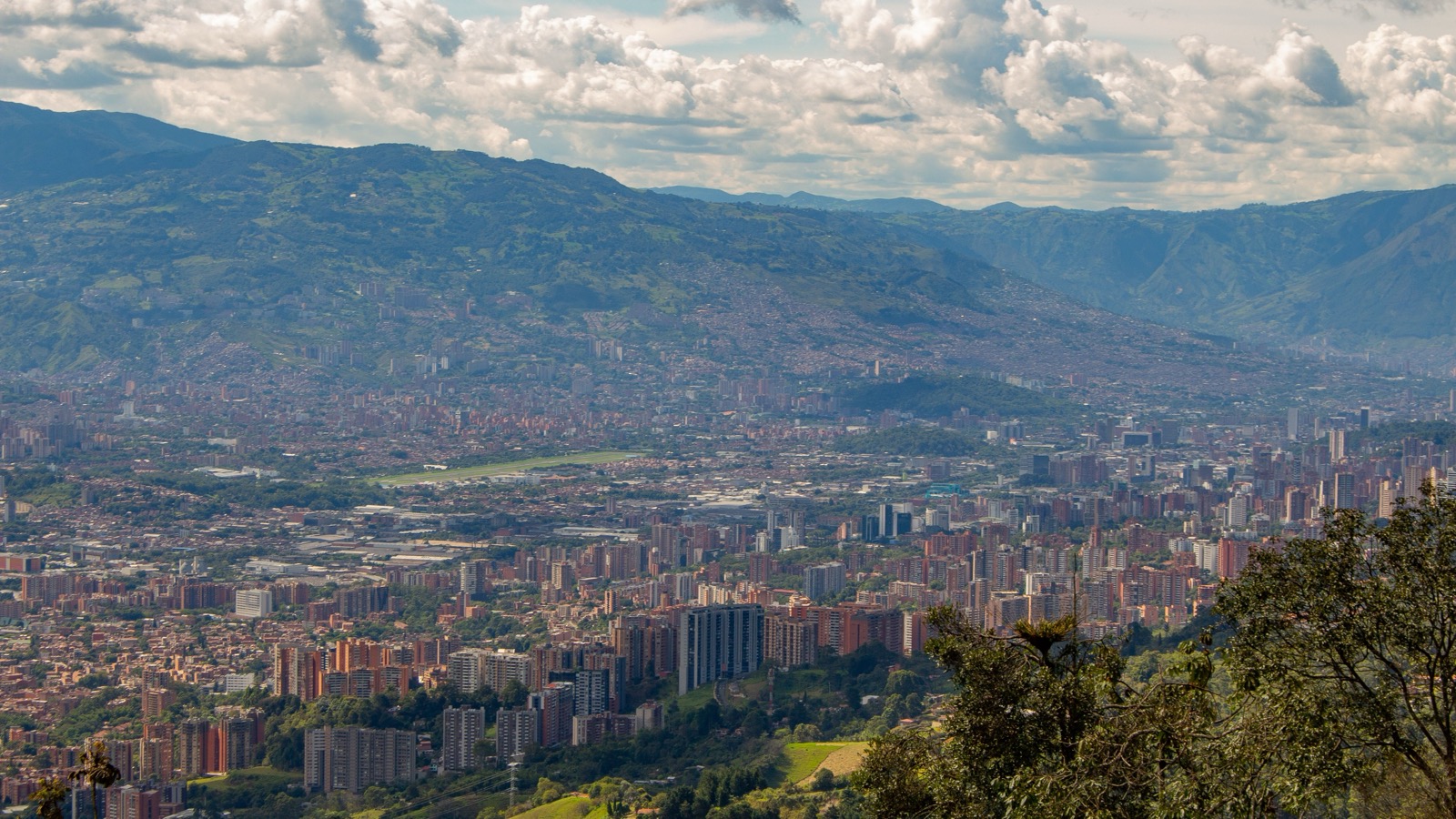
Moving to Medellín is an easier decision than it was ten years ago and a more expensive one than it was three. The city pulled off one of the great urban turnarounds, and then the world noticed: rents in the expat neighbourhoods have climbed, and Colombia has quietly tightened the visa most newcomers were counting on. The pitch still holds — eternal spring, real cost savings against Panama or Costa Rica, warm people, an Andean valley that looks unreasonable in the morning light. Here is the 2026 version with the numbers that changed.
Why people keep moving to Medellín
- Eternal spring. At around 1,500m, Medellín has warm days and cool evenings all year, with no AC or heating.
- Genuinely low cost of living. One of the best-value cities in the Americas for the quality of life.
- Modern and connected. A metro system, strong café and coworking culture, fast internet, and a real innovation scene.
- Warm culture. Paisas are famously friendly, and the social life is rich.
- Excellent, cheap healthcare. Colombia's private care is world-class and remarkably affordable.
- Nature nearby. Green mountains, pueblos like Guatapé, and coffee country a short drive away.
What it costs to live in Medellín
The cost of moving to Medellín splits into four honest tiers, all-in for one person including rent:
| Tier | Monthly | What that buys |
|---|---|---|
| Lean | $900–$1,300 | Envigado or Sabaneta, cooking at home, local gym, metro everywhere |
| Comfortable | $1,000–$1,600 | Laureles one-bed, eating out several times a week, coworking |
| Typical nomad | $1,200–$1,500 | Furnished short-term, coworking, restaurants most nights |
| Higher-end | $1,800–$2,500+ | El Poblado, driver or car, private schooling extra |
The line items that move: food $200–$350, coworking $80–$150, private health cover $60–$120. Transport barely registers — metro and bus rides are under a dollar and most people spend $15–$30 a month getting around a city of two and a half million.
Rent, and the nomad premium
Rent is where the money goes, and where the last three years of people moving to Medellín show up most sharply.
| Neighbourhood | Furnished 1-bed | The read |
|---|---|---|
| El Poblado | $600–$1,200 | Where everyone lands first. Priced accordingly, and increasingly touristy |
| Laureles | $400–$700 | Flat, walkable, on the metro, genuinely Colombian. The value pick |
| Envigado | $415–$610 | Its own town, quieter, 30–40% cheaper than El Poblado |
| Sabaneta | similar to Envigado | Further out, more local still, best value of all |
Two things nobody tells you before you sign.
Short-term furnished carries a 10–30% premium over a long-term lease for the identical apartment. If you are staying a year, that gap is a flight home.
But long-term leases usually need a fiador — a Colombian co-signer who guarantees your rent, with property in the country. Contracts are in Spanish. Foreigners without local ties often cannot produce one, which is precisely why the short-term market can charge the premium. There are insurance products that substitute for a fiador; ask about them before you assume you are stuck.
Is Medellín safe?
The safety question is the one that stops most people from moving to Medellín, so take it plainly. Colombia sits at Level 3, Reconsider Travel, and that rating covers the whole country including remote regions most visitors will never approach. Read it as a blanket, not a description of the city.
The number worth knowing: Medellín’s homicide rate is around 11.7 per 100,000 — lower than a good many large American cities. Random violence against foreigners is not the story.
This is the story. Criminal groups use dating apps to lure foreigners to bars, restaurants and hotels, where they are drugged and robbed. Scopolamine, known locally as burundanga, leaves victims compliant and erases memory, which is long enough to empty accounts. The US Embassy has reported eight suspicious deaths of American citizens in Medellín across a two-month period, many linked to drugging.
It is a targeted, avoidable risk rather than an ambient one. The rules that cover most of it:
- Meet first dates in daylight, in public, and never let a stranger hand you a drink. If you are going to use the apps at all, this is the whole protocol.
- Never hold your phone out on the street, especially at junctions. Motorbike snatching is routine.
- Use Uber, InDriver or Cabify. Not street taxis. US government employees are prohibited from hailing them, which tells you what you need to know.
- Skip Parque Lleras late at night, and stay out of El Centro after dark.
- Anti-kidnapping line is 165. US Embassy: +57 601 275 2000.
One border note: immigration has refused entry to more than 60 visitors in 2026 in a crackdown on badly behaved tourists. Arrive with clean paperwork and a plausible answer about where you are staying.
Visa options, and the rule that catches people
Most people moving to Medellín arrive on the V – Nómadas Digitales visa, and most people underestimate it.
The income bar is tied to Colombia’s minimum wage, which rose to COP 1,750,905 — an increase of roughly 23%. You need three times that, COP 5,252,715 a month, which lands around $1,400 depending on the rate on the day.
Here is the part that produces refusals:
A freelancer who bills $10,000 one month and $1,000 the next fails, despite earning far more than someone steady at $1,500. Only official bank statements — extractos bancarios — count as proof.
The rest of the file: a passport from a visa-exempt country (US, Canada, EU, UK, Australia, New Zealand, Japan, South Korea and others), an FBI background check, and a mandatory all-risk health policy covering accident, illness, hospitalisation, death and repatriation for the full visa term. Government fees run about $220–$235, applied online, with a 30-day decision window.
| Trap | What it means |
|---|---|
| No residency credit | Time on the V nomad visa counts for nothing toward permanent residency. Only Migrant (M) visas accrue. If residency is the goal, the investor route is the direct path |
| No Colombian income | Paid work for Colombian companies or individuals is prohibited on this visa |
| 183 days | Cumulative days in Colombia inside any 365-day window makes you a tax resident, liable to declare worldwide income |
Healthcare
Colombia's healthcare is a genuine highlight. The private system is world-class and astonishingly affordable, and Medellín is home to some of Latin America's top hospitals, which makes it a real medical-tourism destination. Comprehensive private insurance costs a fraction of US premiums, and even out-of-pocket care is cheap by North American standards. For many people it is one of the strongest reasons to stay.
Best neighborhoods for expats
- El Poblado is the upscale, leafy, international hub, with the best restaurants, coworking, and nightlife. It is the most expensive and most foreigner-heavy.
- Laureles is flatter, greener, and more local, and it is increasingly the expat favorite for authenticity and value.
- Envigado is a calmer, family-friendly, traditional town just south, with a strong community feel.
- Sabaneta has small-town charm on the metro line, and is very livable and good value.
The trade-offs to know
- Safety takes street smarts. The "no dar papaya" mindset is non-negotiable, and complacency is where people get caught.
- Spanish is more necessary here. There is less English than in Panama's expat hubs, so you will want to learn it.
- Bureaucracy and paperwork, the Colombian trámites, can be slow and confusing.
- It is a big city, with traffic, noise, and pollution in parts. This is urban living, not a quiet beach town.
- The reputation lingers. You will field worried questions from family. The reality is far better, but the perception is real.
How to make the move
- Do a one-to-three-month trial. Medellín is easy to test on a tourist stamp before you commit.
- Base yourself in Laureles or El Poblado, where the infrastructure and community already are.
- Learn Spanish early. It transforms your safety, your social life, and your daily ease.
- Line up a Colombian immigration attorney to choose the right visa: Nomad, Rentista, or investment.
- Sort private health insurance. It is cheap and excellent, so get covered.
Comparing your Latin American options?
SORA helps foreign buyers find land, build, and settle in Panama and Costa Rica, with fixed-price design-build and people on the ground. The easiest place to start is what a home actually costs.
Compare with Panama →Frequently asked questions
How much does it cost to live in Medellín?
A couple can live very comfortably on $1,500 to $2,500 a month in Medellín, including a nice apartment in El Poblado or Laureles, groceries, dining out, healthcare, and transport. It is meaningfully cheaper than Panama or Costa Rica, helped by a climate that needs no heating or air conditioning.
Is Medellín safe to live in now?
Far safer than its old reputation. The expat neighborhoods of El Poblado, Laureles, and Envigado are pleasant and walkable. But it is a large Latin American city where street smarts matter, since petty theft, phone snatching, and scams targeting foreigners exist. Follow the local rule 'no dar papaya' (don't give an opportunity), stick to good areas, and use registered taxis or apps, and daily life is comfortable.
What visa options are there for moving to Medellín?
Colombia offers a Digital Nomad Visa for remote workers meeting an income threshold, Migrant (M) visas that include pension or Rentista and investment routes, and a path to a Resident (R) visa over time. Property investment above a threshold can also qualify. Thresholds are relatively accessible, so confirm current rules with a Colombian immigration attorney.
Why is Medellín called the City of Eternal Spring?
Because it sits at around 1,500 metres in a tropical valley, which gives it warm days and cool evenings essentially year-round, with no winter, no real summer, and no need for heating or air conditioning. That mild, stable climate is one of the biggest reasons expats and remote workers love it.
Is healthcare good in Medellín?
Yes. Colombia's private healthcare is world-class and remarkably affordable, and Medellín has some of Latin America's top hospitals, which draw real medical tourism. Private insurance costs a fraction of US premiums, and out-of-pocket care is inexpensive by North American standards, which makes it a major draw for expats.
Sources & verification
Figures in this guide were checked against primary and authoritative sources on 7 September 2026. Immigration, tax, and cost figures change — always confirm the current rules with the official body or a licensed professional before acting.
- International Living — Colombia / Medellín cost of living
- Numbeo — Medellín cost of living data
- Colombia Migración — visa categories (confirm current rules)