Clay & Concrete Tile Roofs
The classic colonial roof: a ventilated layer of inert tiles that keeps heat out, never rusts or rots, and can last a century. Beautiful and durable. The price you pay is weight.
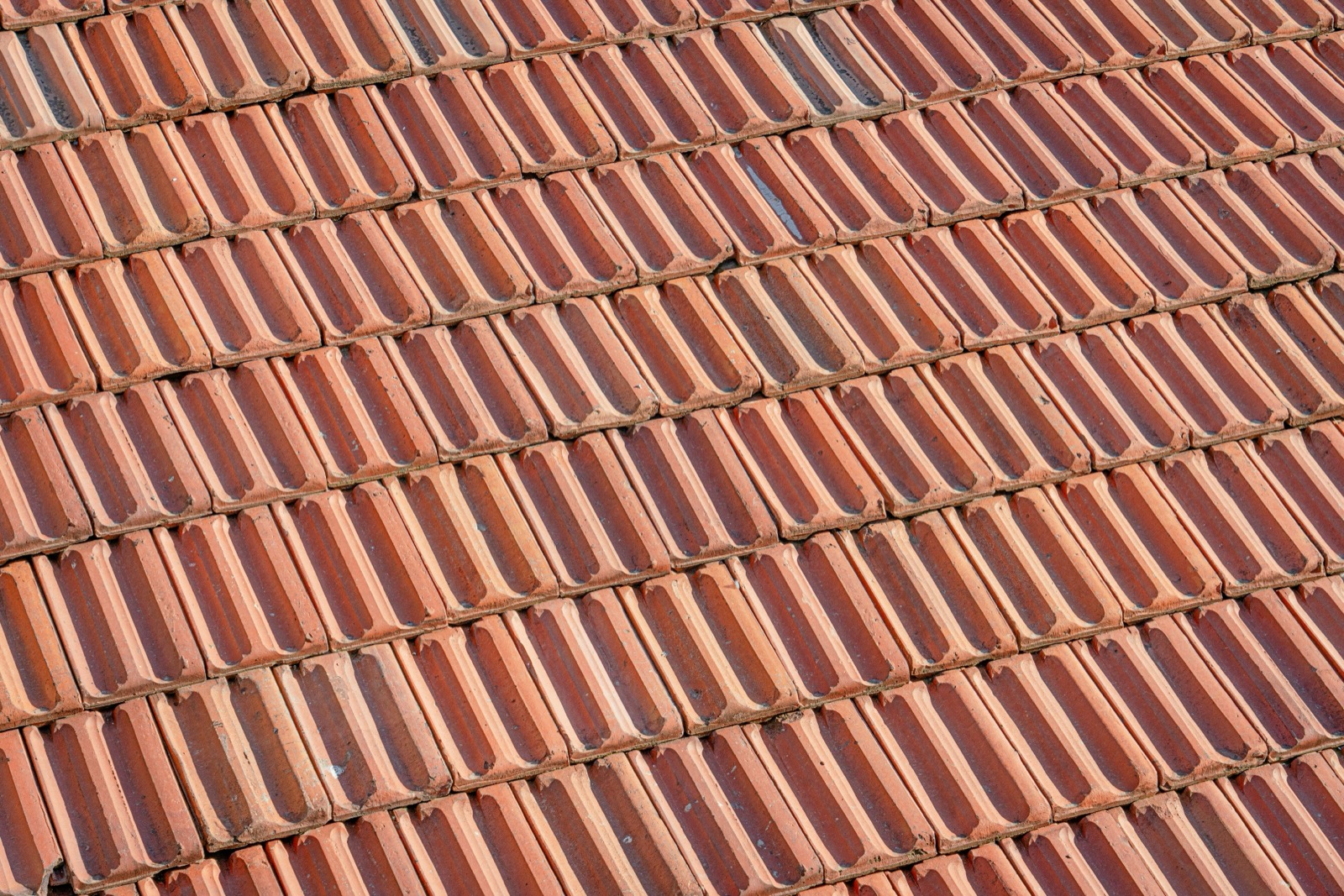
- A tile roof on a 2,000 sq ft house runs roughly $15,450–$20,900 installed.
- The number that catches people is not on the quote. Tile weighs three to five times what asphalt does, so the structure usually needs checking — and often reinforcing.
- Budget $1,000–$10,000 for that reinforcement, plus an engineer’s review.
- Lifespan is the payoff: 50 to 70 years, often longer. You buy it once.
- It handles wind well for an odd reason — sheer weight. But heavy and brittle is a real trade: tile shatters where metal only dents.
Tile is the roof the region already knows. It has been on Spanish colonial buildings across Latin America for centuries, it looks right on almost any house here, and it will outlive you. It is also the only roof on this site where the material is not the main decision. The main decision is whether the building underneath can carry it.
How a tile roof goes together
Individual tiles — fired clay or moulded concrete — hang on battens over an underlayment, overlapping so water runs down the face and off. The tiles themselves are not the waterproof layer. The membrane beneath them is. Tiles are armour and shade.
Clay is the traditional one and holds its colour for decades because the colour is fired in rather than painted on. Concrete is cheaper, heavier still, and available in more shapes. Both behave similarly on the roof.
What a tile roof costs
Around $15,450 to $20,900 installed on a 2,000 sq ft home. That puts it above asphalt and in the same neighbourhood as standing seam metal, depending on the market and the profile you pick.
Then the part that surprises people. Because of the weight, switching to tile almost always requires a structural engineer’s review, and it frequently requires reinforcement costing $1,000 to $10,000. On new construction you design for it from the start and it costs comparatively little. On an existing house it is a genuine second bill.
The weight is the whole story
A tile roof can weigh five times what a shingle roof does. Spread that across a whole house and you are adding several tonnes to what the walls and footings carry — which is why the engineer gets involved.
That weight is not only a cost. It is also why tile handles wind well, rated to 150 mph and above. Most roofs resist uplift through fasteners. Tile resists it partly by being too heavy to lift.
The trade nobody mentions
Wind resistance and impact resistance are rated separately, and they do not move together. This is the sharpest distinction between the two premium roofs.
A clay tile roof holds up superbly against wind and then shatters when something hits it — a branch, wind-borne debris, a dropped tool during maintenance. A standing seam metal panel takes the same impact and comes away with a dent that costs you nothing but looks.
Which matters more depends on your site. Open coastline with high winds and nothing upwind: tile is excellent. A lot with mature trees around it, in a place where storms bring branches down: the brittleness is a live risk, and metal is the safer bet. Walking on tile to service anything is also a skill, and a careless plumber can cost you a morning of tile replacement.
Tile roofs, rated
| Factor | Rating | Notes |
|---|---|---|
| Lifespan | 🟢 | 50 to 70 years, often longer. A once-in-a-lifetime purchase |
| Heat | 🟢 | Thermal mass plus an air gap under the tiles. Cooler than metal or asphalt |
| Looks | 🟢 | Belongs here architecturally in a way nothing else does |
| Wind | 🟢 | 150+ mph, largely because it is too heavy to lift |
| Fire | 🟢 | Non-combustible |
| Salt air | 🟢 | Nothing to corrode. Better than any metal near the sea |
| Weight | 🔴 | 3 to 5× asphalt. Usually needs an engineer, sometimes reinforcement |
| Impact | 🔴 | Shatters where metal dents. Falling branches are the enemy |
| Upfront cost | 🟡 | $15,450–$20,900 on a 2,000 sq ft home, before structure |
| Maintenance access | 🟡 | Walking on it takes skill. Budget for broken tiles after any roof work |
Getting it right
Three things decide whether a tile roof is a good decision on your lot.
Design for the weight from day one. On new construction this is close to free — the engineer sizes the structure knowing what is going on top. Retrofitting tile onto a house framed for shingles is where the $10,000 numbers come from.
The underlayment is the actual roof. Tiles shed the bulk of the water and take the sun, but the membrane beneath is what keeps you dry. Cheap underlayment under expensive tile is the classic false economy, and replacing it means lifting every tile.
Look up before you commit. Trees overhanging the roofline turn tile’s one weakness into an annual expense.
Get those right and tile is the best-looking, longest-lived, coolest roof available here, and it will outlast the mortgage. If your site has debris risk or your structure is already built, standing seam metal gives you similar longevity at a fifth of the weight.
Want a tile roof without discovering the structural bill later?
SORA builds fixed-price homes for foreign buyers in Panama and Costa Rica. If you want tile, we design the structure for it from the first drawing, so the weight is in the price rather than in a surprise.
See 2026 build costs →Frequently asked questions
How much does a tile roof cost?
Roughly $15,450 to $20,900 installed on a 2,000 square foot home, which puts it near standing seam metal. Budget separately for a structural engineer’s review and possibly $1,000 to $10,000 of reinforcement, because that cost rarely appears on the roofing quote.
Why does tile need a structural review?
Weight. Clay runs 6 to 15 pounds per square foot and concrete 9.5 to 12, against 2 to 3.5 for asphalt and about 1 to 1.5 for standing seam metal. Across a whole roof that is several extra tonnes on the walls and footings, so switching to tile almost always means getting an engineer involved.
How long does a tile roof last?
50 to 70 years and frequently longer. Clay holds its colour because the colour is fired in rather than coated on. Practically, you buy this roof once, and the underlayment beneath it will need attention before the tiles do.
Is tile good in hurricanes?
For wind, yes, rated to 150 mph and above, and partly because it is too heavy to lift. For flying debris, no. Wind resistance and impact resistance are rated separately, and tile shatters where a metal panel would only dent. If your lot has mature trees upwind, weigh that carefully.
Is tile cooler than metal?
Generally yes. You get thermal mass plus a ventilated air gap under the tiles, which together do more than a bare metal sheet. Coated metal over good insulation closes most of the gap, but tile starts with the advantage.
Sources & verification
Figures in this guide were checked against primary and authoritative sources on 7 September 2026. Immigration, tax, and cost figures change — always confirm the current rules with the official body or a licensed professional before acting.
- This Old House — 2026 roof cost guide by material
- Amstill Roofing — hurricane-resistant materials, wind versus impact ratings
- Roof Insider — structural review and reinforcement costs for tile