Cement vs Concrete
People use the words interchangeably, but they aren't the same thing. Cement is an ingredient. Concrete is the finished material. A clear explainer, and why the difference matters for your home.
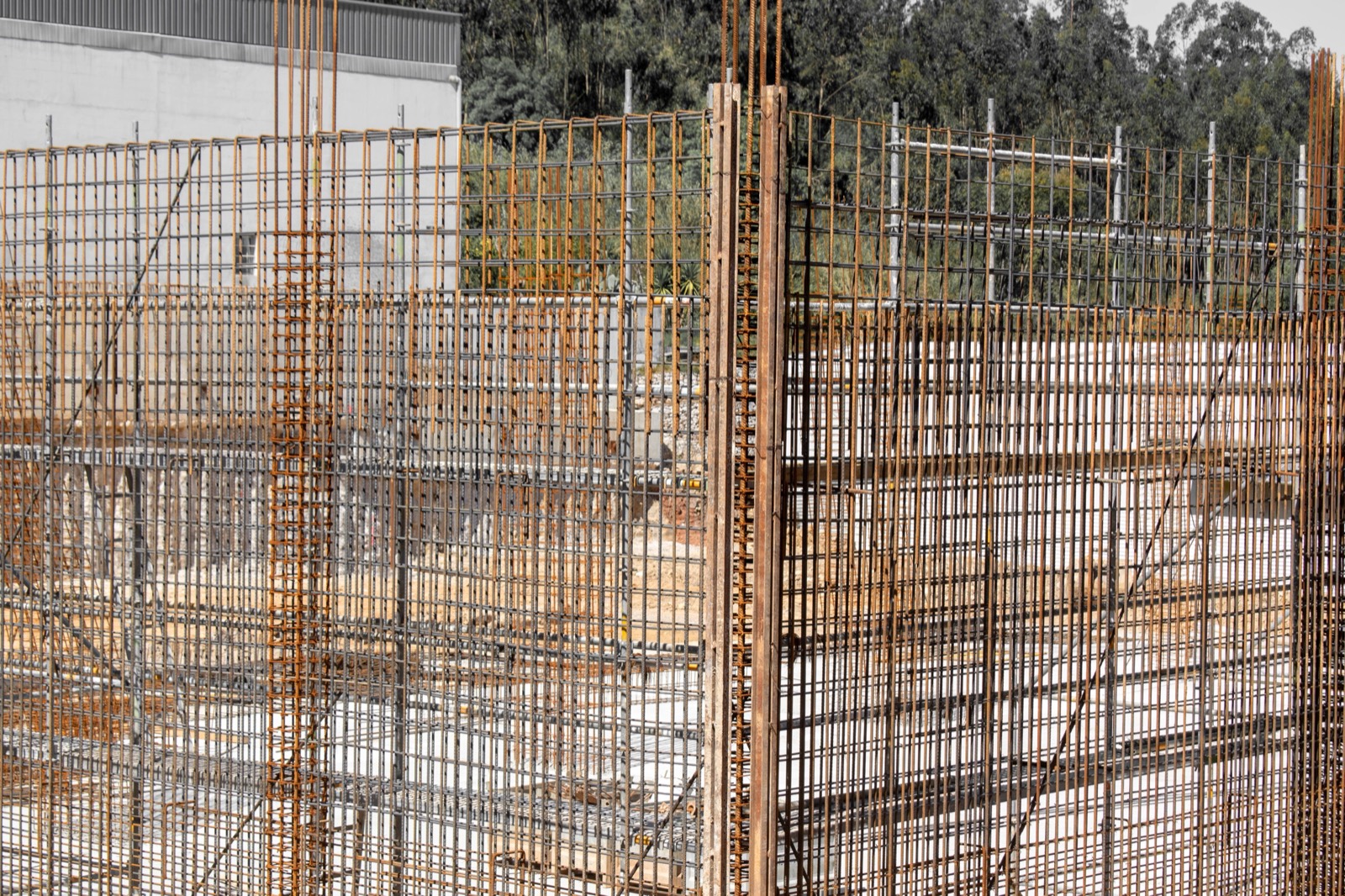
It's one of the most common mix-ups in construction. Cement and concrete are not the same thing. Cement is an ingredient. Concrete is the finished material. Getting the distinction right helps you talk to a builder, read a quote, and understand what your house is actually made of.
The gist
Cement is a fine grey powder that acts as the glue. Concrete is the hard structural material you build with, made by mixing cement with aggregate (sand and gravel) and water. Put simply, cement is to concrete what flour is to bread. You build with concrete; cement is one of its ingredients.At a glance
| Factor | Cement | Concrete |
|---|---|---|
| What it is | A binding ingredient (fine powder) | The finished building material |
| Made of | Limestone, clay, fired into clinker | Cement + aggregate (sand/gravel) + water |
| Role | The glue that binds | The structure itself |
| Used alone? | Rarely; mostly an ingredient | Yes; walls, slabs, foundations |
| Strength | Not structural on its own | Very strong in compression, and in tension with rebar |
| Analogy | Flour | Bread |
Where they part ways
Cement, usually Portland cement, is made by firing limestone and clay into a clinker and grinding it to powder. On its own it does little. Mix it with aggregate and water and a chemical reaction hardens the mix into concrete, the material used for foundations, slabs, walls, and the region's ubiquitous block and flat-roof (losa) construction. Add steel rebar and you get reinforced concrete, strong in both compression and tension. Mortar is a third thing: cement, sand, water, and lime, used to bond blocks and bricks.
What concrete is actually made of
Concrete has four ingredients, and cement is the smallest of them by volume.
| Ingredient | Share by volume | What it does |
|---|---|---|
| Coarse aggregate (gravel, crushed stone) | 40–45% | The bulk and the compressive strength. Concrete is mostly rock. |
| Fine aggregate (sand) | 25–30% | Fills the gaps between the stones |
| Water | 15–20% | Triggers the chemical reaction, and controls workability |
| Cement | 10–15% | The glue. It is the binder, not the material. |
A useful analogy: cement is to concrete what flour is to bread. You cannot build with cement any more than you can eat a bag of flour. Ordering "a truck of cement" for a slab is the giveaway that someone is new to a site.
How cement is made
Portland cement, the type used in essentially all modern construction, was patented in 1824 by Joseph Aspdin and named after Portland stone, which the cured material resembles. Limestone and clay are heated in a kiln to about 1,450°C, which drives off carbon dioxide and fuses the minerals into nodules called clinker. The clinker is ground to a fine powder with a small amount of gypsum, which controls how fast it sets.
That kiln temperature is why cement carries such a heavy carbon footprint. Cement production accounts for roughly 8% of global CO2 emissions, most of it released chemically from the limestone rather than from the fuel.
The five types of Portland cement
Under ASTM C150 there are five standard types, and using the wrong one near salt water is an expensive mistake.
| Type | Name | Use it when |
|---|---|---|
| Type I | General purpose | Ordinary construction with no special exposure |
| Type II | Moderate sulfate resistance | Soils or groundwater with some sulfate content |
| Type III | High early strength | You need to strip forms fast, or you are pouring in cold weather |
| Type IV | Low heat of hydration | Very large pours, where internal heat would crack the mass |
| Type V | High sulfate resistance | Coastal and marine work. The one that matters in the tropics. |
Strength, curing, and the mistake everyone makes
Concrete does not dry. It cures, through a chemical reaction called hydration in which water and cement combine into a crystalline structure. This distinction is not academic. Concrete cures perfectly well underwater, and concrete that dries out too fast cures badly and ends up weak.
| Age | Share of final strength |
|---|---|
| 1 day | ~16% |
| 3 days | ~40% |
| 7 days | ~65–70% |
| 28 days | ~99%, the specification standard |
| 1 year | Marginally more; it keeps gaining slowly for decades |
Every strength figure you see quoted refers to 28-day strength. Typical residential concrete is specified at 2,500 to 4,000 psi, structural work at 3,000 to 5,000, and high-performance mixes above 6,000.
The single most damaging thing on a job site
Adding water to the mix to make it easier to pour.
Strength is governed by the water-to-cement ratio. A ratio around 0.40 to 0.45 gives strong concrete; pushing toward 0.60 and above weakens it sharply. Adding a few buckets of water to a stiff truckload can cut the finished strength by a quarter or more, and the damage is invisible until something cracks years later.
If the mix is too stiff to place, the fix is a plasticiser or a different mix design, not a hose. On your own build, this is worth watching for personally.
One more property worth knowing: concrete is enormously strong in compression and weak in tension, holding only about 10% of its compressive strength when pulled apart. That single fact is why steel reinforcement exists. Rebar takes the tension, concrete takes the compression, and the combination is what makes modern building possible.
Mortar, grout and concrete, compared
The other common confusion. All three are cement-based and none is interchangeable.
| Concrete | Mortar | Grout | |
|---|---|---|---|
| Coarse aggregate | Yes | No | No |
| Contains lime | No | Usually | Sometimes |
| Consistency | Stiff, placed | Sticky, buttered | Fluid, poured |
| Typical strength | 2,500–5,000 psi | 750–2,500 psi | 2,000–5,000 psi |
| Job | Structure: slabs, columns, beams | Bonding block and brick together | Filling block cavities and gaps |
Mortar is deliberately weaker than the block it joins, so that movement cracks the mortar joint rather than the masonry unit. A joint is cheap to repoint; a cracked wall is not. Builders who "improve" a mortar mix by adding cement are making the wall more brittle, not stronger.
How to decide
- Reading quotes: a builder pricing 'concrete' work means the finished structural material, not bags of cement.
- Quality: the ratio of cement to aggregate to water, the mix design, sets concrete's strength. Too much water weakens it.
- In the tropics: nearly every home here is built from concrete, so understanding it is understanding your house.
For a tropical build
Concrete is the default across Panama, Costa Rica, and most of the tropics, and for good reason. It resists heat, humidity, termites, fire, hurricanes, and earthquakes far better than wood. When SORA builds in reinforced concrete, that's cement bound with aggregate and water and reinforced with steel: the backbone of a permanent tropical home. Cement is the powder that makes it possible.
The material is easy. The mix is not.
Concrete is the most forgiving material in the world to specify and one of the least forgiving to place badly. Water-cement ratio, cover over the rebar, cure time and the right cement type for a coastal site are what separate a house that lasts a century from one that spalls in fifteen years. SORA builds fixed-price homes in Panama and Costa Rica in reinforced concrete, and we are happy to explain exactly what is going into yours.
See 2026 build costs →Frequently asked questions
Is cement the same as concrete?
No. Cement is a fine powder that acts as a binder, one ingredient. Concrete is the finished building material made by mixing cement with aggregate (sand and gravel) and water. You build structures from concrete; cement is one of its components.
What is concrete made of?
Concrete is made of cement, aggregate (sand and gravel), and water. The cement and water react and harden, binding the aggregate into a strong solid. Adding steel rebar creates reinforced concrete, which is strong in both compression and tension.
What's the difference between cement, concrete, and mortar?
Cement is the powdered binder. Concrete is cement plus aggregate and water, used for structural elements like slabs and walls. Mortar is cement, sand, water, and lime, a stickier mix used to bond blocks and bricks rather than to build structure.
Sources & verification
Figures in this guide were checked against primary and authoritative sources on 27 July 2026. Immigration, tax, and cost figures change — always confirm the current rules with the official body or a licensed professional before acting.
- Bob Vila — cement vs concrete explained
- Forbes Home — concrete basics