Moving to Trinidad & Tobago in 2026
The Caribbean's oil-rich, English-speaking twin-island republic — substance over resorts, outside the hurricane belt, and cheaper than the US — but with a real crime picture you must plan around. The honest guide.

- Trinidad runs on oil and gas, not tourism. That gives it an economy, an English-speaking professional class, and jobs, which most Caribbean islands do not have.
- There is no retiree visa and no nomad visa. Legal long stays run through an employer-sponsored work permit, and you may not work more than 30 days a year without one.
- Budget roughly $1,875 a month for a comfortable single life, more if you want the safe neighbourhoods, which you will.
- Crime is the real constraint. It is concentrated, avoidable, and exhausting to think about every day. Tobago is a different story from Trinidad.
- The quiet prize: T and T sits below the hurricane belt. The last direct major strike was 1963.
Trinidad and Tobago is the Caribbean's odd one out. It is not a resort economy; it is an energy one, the region's largest producer, with refineries and a professional middle class and traffic jams. That makes it the rare island where you can have a career rather than a long holiday. It also makes it the island where the question is not "can I afford this" but "where exactly do I live".
Who it's for
Be clear-eyed about the door you are walking through. There is no retiree visa here and no digital-nomad visa, and the work-permit route requires a company willing to sponsor you and prove it could not hire a Trinidadian instead.
That filters the field hard. The people who thrive here are energy, finance and IT professionals arriving on a job offer, affluent retirees who can fund private insurance and secure housing outright, and well-paid remote workers who treat neighbourhood choice as a budget line rather than a preference. If you are looking for the easy turnkey island move, several of the other 28 will suit you better.
Is Trinidad & Tobago safe?
Let us not dance around it. The country carries an elevated US advisory because the crime is real, and gang violence is a genuine feature of certain neighbourhoods rather than a rumour.
The useful detail, which advisories flatten, is that it is highly geographic. Violence concentrates in specific parts of Port of Spain and a handful of other districts. Established expat areas such as Westmoorings, Maraval, St Clair and Woodbrook sit well outside them, and Tobago is a materially safer island than Trinidad, closer in feel to a quiet Windward island than to the capital.
Most expats settle into a formula and stop thinking about it: a good neighbourhood, a secured home, and habits that would be unremarkable in São Paulo or Kingston. Drive rather than walk after dark. Do not wear the watch. Choose gated or patrolled housing and pay for it without complaining.
The honest cost of that formula is not financial. It is the low background tax of always making the safe choice. Some people never notice it. Others find that after two years it has quietly worn them down. Only you know which one you are, and a two-week visit will not tell you.
What a month actually costs
Living costs land roughly 30 to 45% below major US cities, with a two-tier reality underneath: expats and affluent locals pay noticeably more than working-class Trinidadians for housing, imported goods and services. Most of what fills a supermarket here arrives by ship, and the price tag says so.
Where the money goes: an unfurnished one-bedroom in the northern suburbs runs $900 to $1,800 a month, and a two-bedroom $1,200 to $2,200. Move out to Chaguanas or San Fernando and rents drop to $500 to $1,000, at the cost of a commute you will grow to resent. Groceries run $60 to $100 a week for one person. Utilities land at $80 to $150 depending on how hard you run the air conditioning, which in Trinidad is harder than you expect.
Two budget lines people forget. A car is not optional, because public transport is not dependable and Port of Spain traffic is genuinely bad. And the safe neighbourhoods cost what they cost, so a cheap rent quote usually means you are looking at somewhere you have not driven through at night.
Residency & work permits
US, Canadian, UK and EU citizens enter visa-free for 90 days, extendable. Fine for a look. Not a life.
The rule that catches people out sits in the Immigration Act: a non-resident may not work in Trinidad and Tobago for more than 30 days in any 12-month period without a permit. Not 30 days per visit. Thirty days per year. Remote workers quietly billing a foreign client are in a grey zone that nobody enforces energetically, but you should know exactly where the line is drawn.
A real work permit is issued to a named person, for a fixed period, tied to one specific employer, and only where the skill is not available locally. Your employer has to advertise the job in local newspapers and report on the applicants they received. The permit renews annually, and applications should go in about three months before you plan to arrive. There is also an explicit expectation written into the process that you will transfer your skills to local colleagues over time.
If you hold citizenship of a CARICOM country, the picture changes completely. A CARICOM Skills Certificate grants indefinite stay and the right to work without a conventional permit, and the qualifying categories are broader than most people assume: university and associate degree holders, nurses, teachers, artisans, musicians, media workers, sportspeople, agricultural and domestic workers, and private security officers among them.
Stack up enough consecutive permitted years and permanent residency becomes possible at five, with citizenship at eight. Dual citizenship is allowed.
Taxes & hurricanes
There is no wealth tax, no inheritance tax and no gift tax, and treaties with the US, Canada and the UK take the edge off double taxation. Straightforward by regional standards.
The bigger financial story is the weather, and it is good news. Trinidad and Tobago sits at roughly ten degrees north, below the corridor most Atlantic hurricanes travel. The last major direct strike was Flora in 1963. Compare that with Jamaica, the Bahamas or the Dominican Republic, where hurricane risk shapes insurance premiums, construction budgets and the rhythm of every autumn.
It is not immunity. Wet-season flooding is a genuine local problem, and flash flooding in the wrong valley can ruin a ground floor. Check the drainage of any property before you check the view.
Healthcare
Two systems run in parallel. Public care is free and under-resourced. Private hospitals, concentrated in Port of Spain, are faster and are what expats use.
Budget $100 to $250 a month for private insurance and treat it as non-negotiable. Specialists exist in the capital but the range is narrower than in a larger Latin American city, so complex cases fly out. Miami is about three and a half hours away, which is close enough to be a real plan rather than a fantasy.
The things nobody puts in the brochure
A few practicalities that shape daily life more than any statistic:
- Traffic is a lifestyle factor. Port of Spain congestion is severe, and where you live relative to where you work will determine roughly two hours of every weekday.
- The capital empties after work. Port of Spain is compact and largely commercial. Almost everyone lives in the surrounding areas and drives in.
- Internet is genuinely good. Median fixed broadband exceeds 200 Mbps, which puts it ahead of most of the Caribbean and makes remote work practical.
- Leases can be informal. Rental agreements for foreigners are often loose and enforcement is inconsistent. Get it in writing, get a lawyer to look at it, and do not prepay a year.
- Carnival is not a tourist event. It is the organising principle of the national calendar. The country genuinely slows down around it, and if you are here, you participate.
Which island, which street
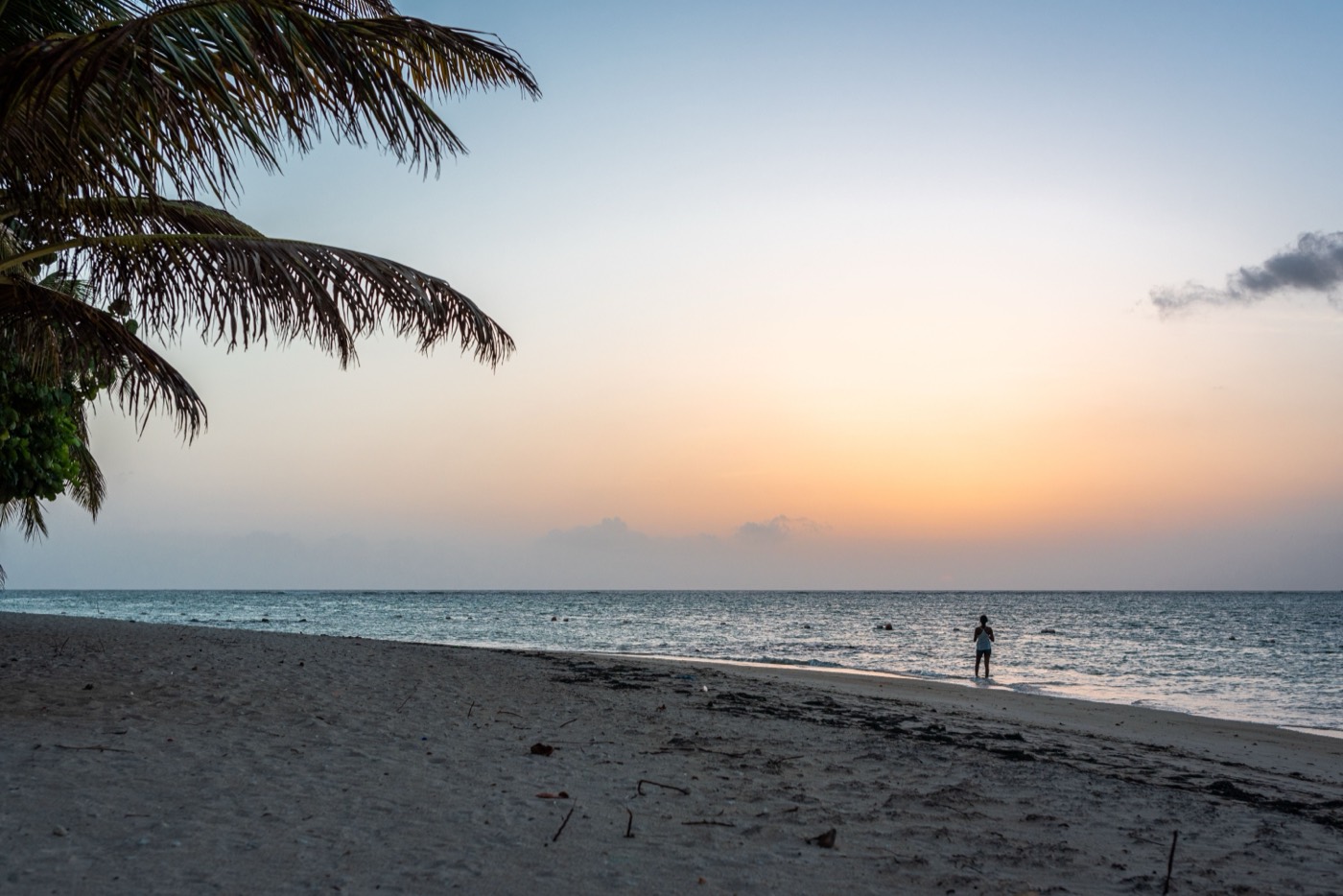
The expat community centers on the safer west of Port of Spain: Westmoorings, St Clair, and Maraval, with strong social networks. Many choose Tobago outright for its calmer, safer, beach-focused pace.
Is Trinidad & Tobago right for you?
- Great fit if: you have an energy/finance job or business, want an English-speaking, hurricane-safe Caribbean base with real culture, and will invest in a secure neighborhood.
- Think twice if: safety anxiety would dominate daily life, or you want an easy retiree/nomad visa and turnkey move.
Relocating is step one. Owning the home is step two.
SORA designs and builds homes across the tropics — with our deepest roots in Panama and Costa Rica, where residency is straightforward and building costs a fraction of the coastal Caribbean. If your move is really about a place of your own in the sun, it is worth seeing what a fixed-price build looks like before you commit to any one island.
Frequently asked questions
Is Trinidad and Tobago safe?
Safety is the key consideration. The country carries an elevated US travel advisory because crime, including gang violence, is real, but it's concentrated in specific urban areas that expats avoid. Established expat neighborhoods (Westmoorings, Maraval, St Clair) are considerably safer, and Tobago is significantly safer than Trinidad. Most expats live comfortably with secure housing and prudent habits.
How much does it cost to live in Trinidad and Tobago?
Roughly 30–45% below major US cities, on a two-tier pricing system where expats pay more than locals. A moderate lifestyle runs about $1,875/month, a comfortable one closer to $2,900, and families with international schooling should budget $5,000+.
How do you get residency in Trinidad and Tobago?
There's no retiree or digital-nomad visa. US/Canada/UK/EU citizens enter visa-free for 90 days (extendable); long-term status comes through employer-sponsored work permits or business-investment residency. Permanent residency is possible after 5 years and citizenship after 8, with dual citizenship allowed.
Can I work remotely from Trinidad on a tourist entry?
Legally, only briefly. The Immigration Act caps work by non-residents at 30 days in any consecutive 12-month period without a permit, and that is per year rather than per visit. Enforcement against someone quietly billing a foreign client is not aggressive, but you should know exactly where the line sits before you plan a year here.
Is Trinidad and Tobago in the hurricane belt?
It sits at the southern edge and is rarely hit directly. The last major hurricane strike was Flora in 1963. Wet-season flooding and tropical storms occur, but hurricane risk is dramatically lower than in Jamaica, the Bahamas, or the Dominican Republic.
Sources & verification
Figures in this guide were checked against primary and authoritative sources on 3 September 2026. Immigration, tax, and cost figures change, so always confirm the current rules with the official body or a licensed professional before acting.
- T&T Immigration Division, official residency & work-permit authority
- US State Department — Trinidad & Tobago, travel advisory (crime)
- T&T Board of Inland Revenue, official tax authority
- Ministry of Homeland Security, work-permit rules and application process
- LivingCost, 2026 Port of Spain cost-of-living data