Moving to Aruba in 2026
Outside the hurricane belt, Dutch-standard healthcare, English everywhere, and one of the safest islands in the region, Aruba is a favorite for retirees. Here's the cost, the residency routes, and the tax fine print.
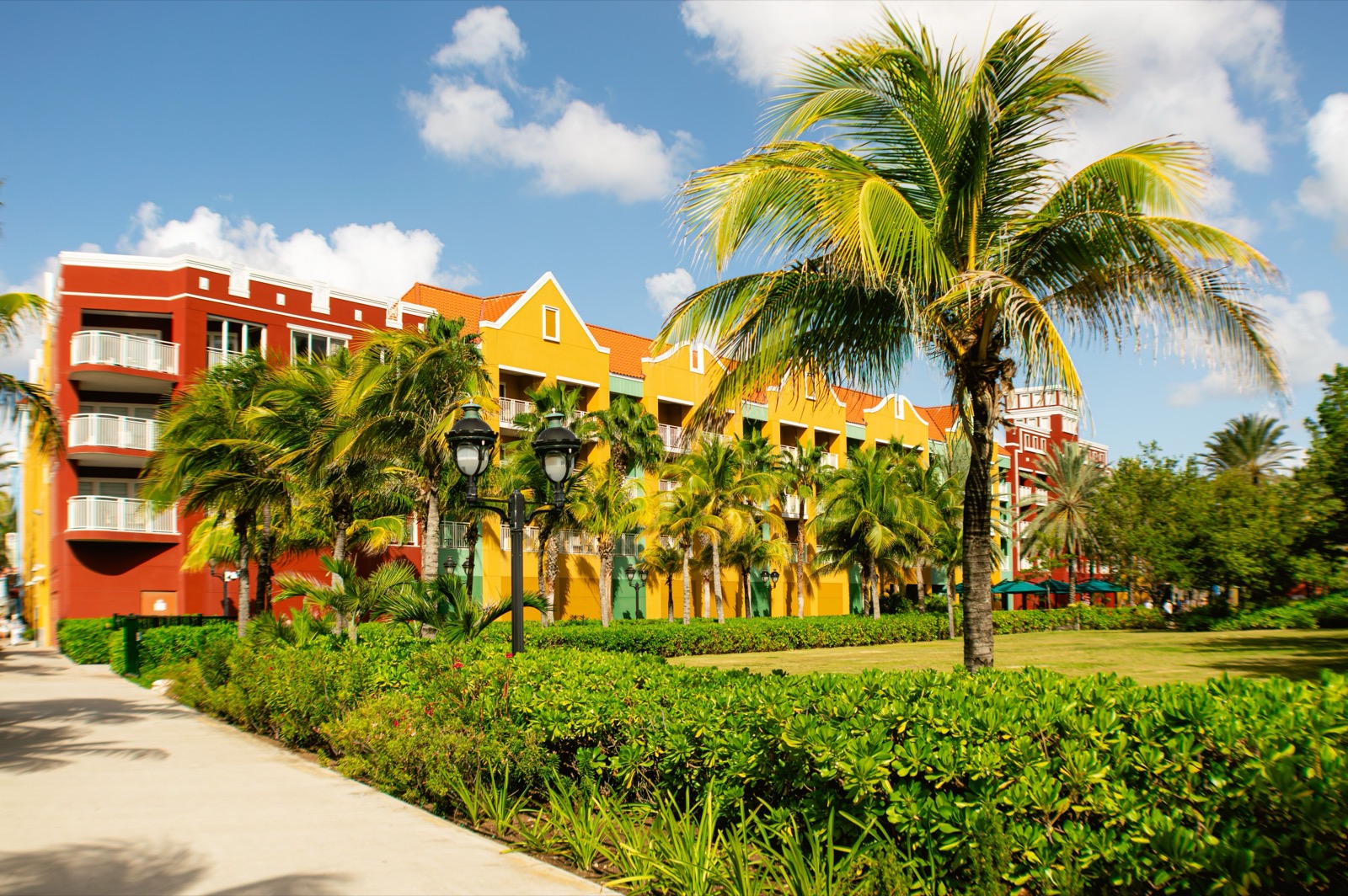
Aruba is where a lot of retirees quietly land. And for good reasons that go beyond the beaches. It sits far enough south to be outside the hurricane belt, its healthcare rivals North American and European standards, English is spoken everywhere alongside Dutch, and crime is low. As a constituent country of the Kingdom of the Netherlands, it also offers a real path to permanent residency and eventually Dutch citizenship. The trade-offs are a higher cost of living and a complex tax regime worth understanding before you move.
At a glance
- Outside the hurricane belt. The strongest structural argument for Aruba, and the reason insurance and rebuilding costs behave differently here than almost anywhere else in the region.
- One of the safest islands in the Caribbean, at US State Department Level 1.
- The tax will surprise you. Aruba's top marginal income-tax rate is 52%, reached at AWG 135,527 (about US$75,000). This is not a low-tax island.
- You become a tax resident at 183 days, and residents are taxed on worldwide income.
- The retiree permit is well defined: age 55+ with a guaranteed pension or annuity yielding at least AWG 50,000 a year, or age 18+ with AWG 100,000 a year (about US$55,500) from assets or investments.
- Compare Bonaire before deciding. It is Dutch, outside the hurricane belt, denominated in US dollars, and tops out near 35.4%.
Is Aruba safe?
Yes, Aruba is renowned as one of the safest islands in the Caribbean. Low violent crime and political stability are central to its appeal, particularly for retirees who want first-world calm with a tropical backdrop. Ordinary precautions cover it.
The hurricane thing: why it matters
Aruba (with Bonaire and Curaçao) sits off the coast of Venezuela, south of the main Atlantic hurricane track, so it's only rarely affected. For anyone weighing storm risk, that single fact separates the ABC islands from most of the Caribbean.
What Aruba costs
Aruba is comfortable but not cheap. Nearly all food and goods are imported. Estimates cluster around $2,700/month for a moderate lifestyle including rent.
| Item (2026, approx.) | Typical figure |
|---|---|
| Single person, excl. rent | ~$1,150/mo |
| 1-bed, city center rent | ~$930/mo |
| Moderate all-in lifestyle | ~$2,700/mo |
The retiree permit, in numbers
Aruba runs a purpose-built permit for pensioners and people living off investment income, administered by DIMAS. You may not do paid work on it; employment requires a separate work permit.
| With guaranteed income | Without guaranteed income | |
|---|---|---|
| Minimum age | 55 | 18 |
| Income required | Guaranteed pension or annuity yielding at least AWG 50,000/yr (~US$27,800) | Demonstrable AWG 100,000/yr (~US$55,500) from assets, savings or investments |
| Permit term | One year, renewable annually | |
| Right to work | No | |
Permanence takes five consecutive years of residence, during which you may not spend more than six consecutive months or eight months in total outside Aruba. You will also sit a Dutch civic integration exam and show stable income. That exam catches people out: it is conducted in Dutch, and Aruba's everyday languages are Papiamento and English, so passing it usually means deliberately studying a language you will rarely use socially.
Residency & the retirement route
Residency runs through Aruba's DIMAS office and requires proof of income, a clean criminal record, health insurance, and a valid passport (US/Canada/EU visitors get 90 days visa-free). The retirement path (a Dutch residence permit handled specifically for the island) has two income options:
- Guaranteed income status: prove a guaranteed annual income of about US$28,000.
- Without guaranteed status: prove about US$56,000/year (a “pensionado” category also exists for pension income).
- Not ready to commit? The “One Happy Workation” program lets Americans live and work remotely for up to 90 days.
Permanent residency comes after five consecutive years, and leads (with a Dutch civic-integration exam) toward Dutch (EU) citizenship.
Healthcare, Dutch-standard
This is one of Aruba's strongest cards. The system rivals North American and European standards, in a modern, English-speaking environment, anchored by the Dr. Horacio Oduber Hospital and the ImSan institute (both equipped to airlift complex cases to Curaçao). Health insurance is mandatory; long-term residents can eventually join the national AZV system, but private cover is required until then.
Taxes: read this before you move
Most people arrive at Aruba expecting a Caribbean tax position. It does not have one. Aruba funds a Dutch-standard state, and it taxes like one.
| Tax | Rate (2026) | Note |
|---|---|---|
| Personal income tax | Progressive, up to 52% | Starts at AWG 30,000; top rate reached at AWG 135,527 (~US$75,000) |
| Tax residency trigger | 183 days | Residents are taxed on worldwide income |
| Personal capital gains | Generally 0% | Unless you hold a substantial interest of 5% or more |
| Corporate income tax | 22% | |
| Turnover tax (BBO/BAZV/BAVP) | 7% | Applied broadly to goods and services |
| Dividend tax | 10% |
Read that first row carefully. The 52% top rate arrives at roughly US$75,000 of income, which is not a high threshold. A couple living on a decent private pension can find themselves in Aruba's top bracket, on worldwide income, having moved there for the weather.
The capital-gains position is the genuine bright spot: personal gains on listed investments are generally untaxed. For someone living off a portfolio rather than income, that changes the calculation considerably.
None of this makes Aruba a bad place to live. It makes it a place you move to for safety, healthcare and the absence of hurricanes, not for tax. If tax is the driver, the honest comparison is with Bonaire, Panama or Costa Rica, and Aruba loses it.
Aruba taxes residents on worldwide income at progressive rates, historically steep (up to ~59%), though 2025 reforms introduced a zero-rate band on the first ~AWG 34,930 of income. Capital gains are taxed as income. This is complex and treaty-dependent, so specialized cross-border tax advice is important here.
Choosing where to live
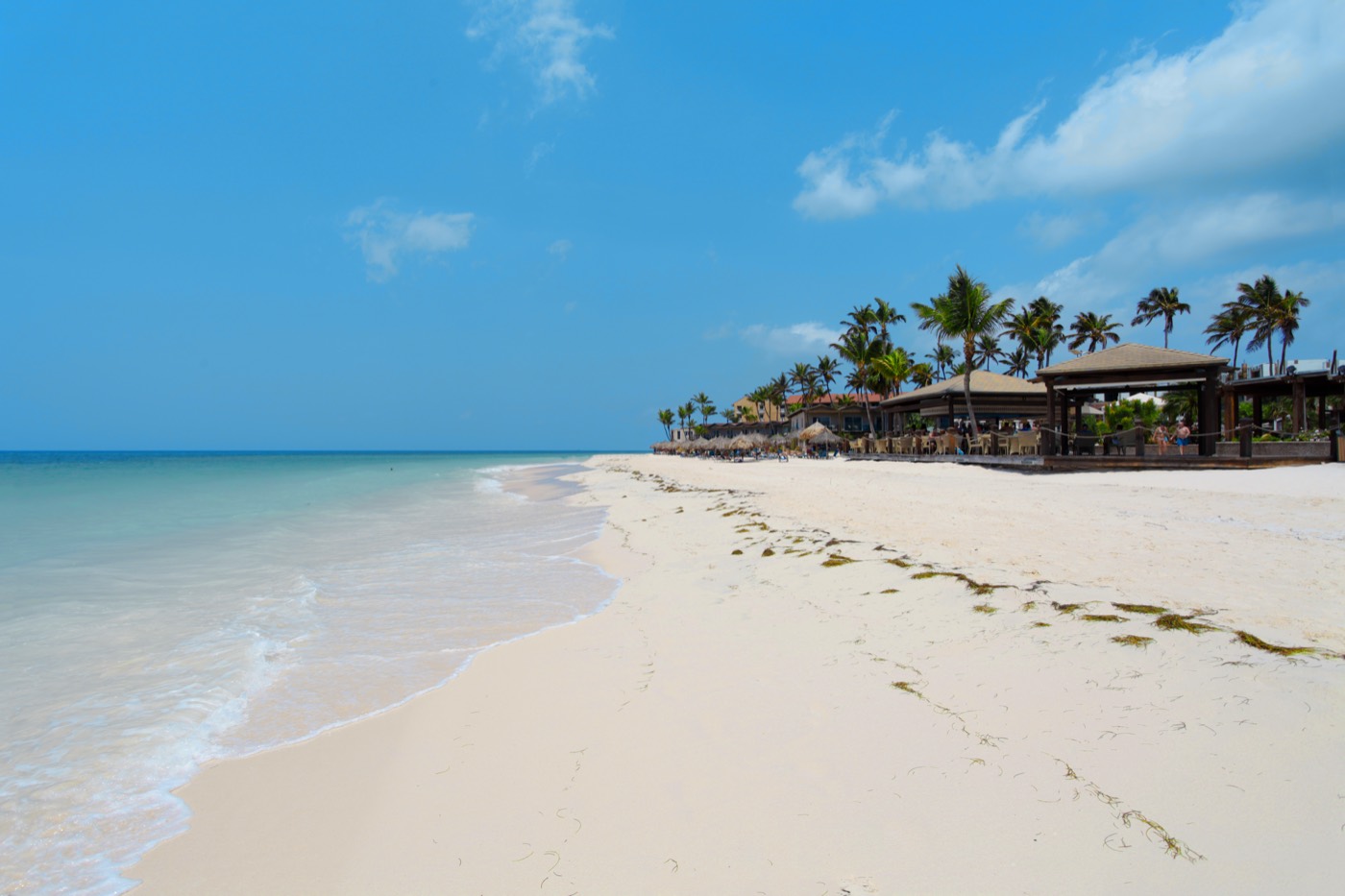
Most expats settle in or near Oranjestad, the capital, and along the western coast where tourism and business concentrate: condos and low-maintenance homes near the beach are the popular picks.
Is Aruba right for you?
- Great fit if: you're a retiree who wants safety, excellent healthcare, English, and freedom from hurricane anxiety, with income to clear the residency threshold.
- Think twice if: you'll be tax-resident on high worldwide income (the rates are steep), or you want rock-bottom Caribbean costs.
No hurricanes, and a 52% top tax rate.
Aruba buys you something real: one of the safest islands in the region, Dutch healthcare, and a position outside the storm track. What it does not buy is a tax advantage. Panama sits outside the hurricane belt too, taxes foreign income at zero, and builds a house for a fraction of Aruban construction costs. If the storm map is what brought you here, it is worth seeing the mainland option beside it.
Frequently asked questions
Is Aruba safe to live in?
Yes. Aruba is considered one of the safest islands in the Caribbean, with low violent crime and political stability. It's a major reason retirees favor it. Normal precautions are sufficient.
Is Aruba in the hurricane belt?
No. Aruba sits far south off the Venezuelan coast, below the main Atlantic hurricane track, and is only rarely affected, one of its biggest advantages over most Caribbean islands (shared with Bonaire and Curaçao).
How do you retire in Aruba?
Through a Dutch residence permit handled via Aruba's DIMAS office. You prove either a guaranteed annual income of about US$28,000, or about US$56,000/year without guaranteed status; a pensionado category exists for pension income. Health insurance is required, and permanent residency follows five continuous years.
How much does it cost to live in Aruba?
Around $2,700/month for a moderate lifestyle including rent, since nearly everything is imported. A single person spends roughly $1,150/month excluding rent, and a city-center one-bedroom rents around $930/month.
Sources & verification
Figures in this guide were checked against primary and authoritative sources on 27 July 2026. Immigration, tax, and cost figures change: always confirm the current rules with the official body or a licensed professional before acting.
- DIMAS Aruba. Official residency-permit authority
- Departamento di Impuesto (Aruba tax), official tax authority (worldwide-income rules)
- International Living: Aruba visas. Corroborating retirement-income thresholds