The $40,000 House
Cars got 100× cheaper. Solar got 100× cheaper. Homes got MORE expensive. What would have to change before you could build a large, sound, beautiful home for $40,000.

Cars got roughly 100× cheaper. Solar panels got ~100× cheaper. Computing got a billion times cheaper. And homes? Building a house got more expensive. Housing is the great anomaly of the modern economy. So when someone tells you a $40,000 house is coming, the right question is not whether the technology works. It does. The question is which part of the house it makes cheap.
The short version
- The $40,000 house already exists. It is the printed shell, and it is roughly $35,000 on a 1,200 sq ft home.
- That same house cost the owner $140,000 once it had a roof, wiring, plumbing, windows and a kitchen.
- Printing walls takes 24 to 72 hours. Everything after that still takes months and still costs what it always did.
- Real delivered projects land at $180,000 to $190,000, about 25 to 30% under local traditional builds. Genuine, but not a revolution.
- Where it gets interesting is where labour is expensive and land is cheap, which is not where most of the printing is happening.
Why housing never got cheaper
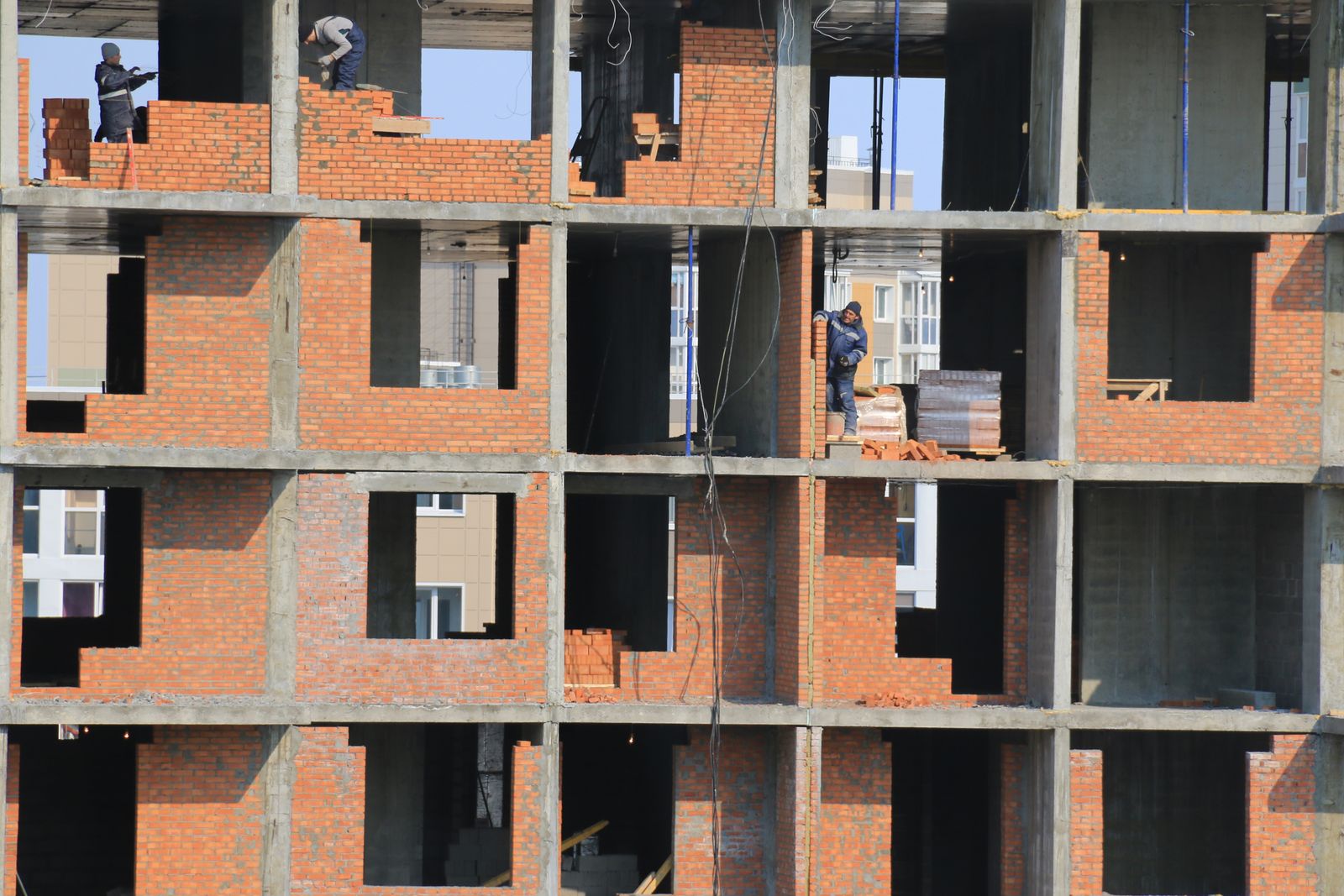
Here is the fact that should bother you. For 50+ years, US construction productivity has been flat to declining — the opposite of nearly every other industry you can name. Three reasons stand out. Buildings are site-specific and non-repetitive, which fights factory-style mass production. Technology adoption stalled in the 1970s, the share of machines in construction cost has sat at ~10% ever since; bulldozers, mixers, and cranes are all 1950s tech. And regulation and land-use rules block the economies of scale that made other products cheap.
If you want the most sobering evidence, it is the prefab paradox: factory-built housing was about a third of US homes in 1960–1970, and fell to roughly 5%. It declined. And the countries that embraced it hardest (Sweden, Japan) still saw flat productivity. Manufactured-home cost curves look like conventional construction, not like cars. "Just build housing like manufacturing" has failed, repeatedly, for decades. Any honest $40k thesis has to explain why this time is different.
What the printer actually pays for
Alquist 3D pilot, Virginia. The $35,000 shell was grant-funded; $140,000 is the homeowner's total out-of-pocket after donations.
Where 3D printing actually stands today
The viral "$4,000 house" is real. It is also a shell — walls and floor, and nothing else. You can print that shell for $4,000 to $35,000. A livable, turnkey printed home still runs $140,000 to $500,000+.
Here is the part that catches you off guard. Per square foot, printed homes currently cost more than conventional ones: roughly $375 against $268. The machines cost a fortune, the technology is young, and the trades that make a house habitable — plumbing, electrical, finishing — still need human hands. The shell was never the expensive part. That is the trap.
So look past the renderings at what actually got built. Habitat for Humanity and Alquist 3D delivered homes in Newport News, Virginia for $180,000 to $190,000, against $260,000-plus for comparable traditional construction locally. That is a genuine 25 to 30% saving, and worth having. It is not a hundredfold collapse.
Meanwhile ICON's 100-home community in Georgetown, Texas starts in the mid-$400,000s. Printing lowered their cost. It did not lower the market price of a house in Texas — and that distinction is the whole story.
The machine economics explain why. A large gantry printer runs about $120 an hour and lays 60 to 80 square feet of wall in that hour. The proprietary limestone mixes cost $160 to $220 a cubic yard, and ICON's Lavacrete runs roughly 40% more per yard than ordinary ready-mix. So you are trading cheap concrete and cheap labour for expensive concrete and no labour. Whether that is a saving depends entirely on what masons cost where you are standing.
Three frictions rarely make the headlines, and they are the ones that will decide whether your printed house is legal. New York City and Chicago have not approved on-site printing, citing freeze-thaw testing gaps, which pushes projects indoors as modular panels and quietly erases part of the saving. Ground conditions bite: the expansive clays around Greeley, Colorado need deep piers, adding roughly $15 per square foot to the foundation before a printer switches on. And on warranty, ICON covers printed walls for ten years against cracks wider than 2mm, which tells you what the industry itself considers the open question.
The 7 forces that would make a $40k home real
No single lever gets there, a $40k large home (excluding land) means roughly $25–40/sq ft versus $150–270 today, i.e. a quarter to an eighth of current cost. That only happens if these forces stack and compound:
| Force | What it attacks | Maturity |
|---|---|---|
| Robotic shell (3D printing / auto-masonry) | The structure's labor | 🟡 Working, scaling |
| Automating the trades (prefab MEP pods, robotic finishing) | The REAL cost bottleneck today | 🔴 Early, the frontier |
| Cheap/local/novel materials (site soil, geopolymer, bamboo) | Material cost → near-zero | 🟡 Emerging |
| Digital mass-customization (parametric / a 3D configurator) | The non-repetition that killed old prefab | 🟢 Here now |
| Volume → the experience curve (Wright's Law, ~20–30%/doubling) | The reason housing never rode the curve | 🔴 Needs a scaled producer |
| AI design (less material, same strength; kill the ~30% rework waste) | $177B/yr of US waste | 🟡 Arriving fast |
| Regulatory reform (pre-approved designs, codes for new methods) | The biggest non-tech wall | 🔴 Slow, political |
Here is the key insight, and it explains your whole housing market: old prefab failed because buildings are all different, and factories are good at making things that are all the same. Robotics + AI + digital design finally break that trade-off, a machine can make every unit different from the same file, delivering aesthetic variety at near-zero marginal cost. That's the thing that was never true before.
Buildability of the vision, possible, but not inevitable
So here is the honest verdict. A $40k home that is large, sound and beautiful is reachable — and it is the hardest deflation problem in the economy. It will not arrive on hype alone.
The reason to bet yes this time: robotics and AI can finally handle the site-specificity and non-repetition that defeated every previous attempt. Every earlier wave of prefab died on the fact that no two lots are the same.
And here is your reason for humility: the real walls aren't the walls. They are the trades, the regulation, and the land. Solve those and $40k structures become plausible in fifteen to thirty years. Ignore them, and printing just hands you a cheaper shell inside a house that costs what it always did.
Where SORA fits in this
This is the bet we are built on, and you can hold us to it: fixed price, integrated design-build, standardization, and a 3D configurator — that last one being the digital mass-customization force, and it is live today. All of it in a region with lower labor and regulatory friction than the United States.
The $40,000 home is the north star, not the brochure. We are not waiting for one magic machine. We are stacking these seven forces, one at a time, before anyone else does.
Cheaper, sounder, more beautiful homes are not a fantasy. They are an engineering and logistics problem — and that is a much better thing for a problem to be.
Thinking about building in Panama or Costa Rica?
SORA is a fixed-price design-build platform for foreign buyers. We build in reinforced concrete by default, and we can talk you through when an alternative method makes sense for the tropics. Play with cost live in the 3D configurator.
See real 2026 build costs →Frequently asked questions
Could a house really be built for $40,000?
For the structure, finishes, and labor (excluding land), it's genuinely possible in the long run, but only if several forces compound: robotic construction, automated trades, cheap local materials, digital mass-customization, manufacturing volume, AI-optimized design, and regulatory reform. No single technology (including 3D printing) gets there alone. Land, permitting, and site work are separate and don't deflate the same way.
Are 3D-printed houses actually cheaper than normal ones?
Not yet, on a finished basis. The printed shell can be very cheap ($4k–$35k), but a livable, turnkey printed home ($140k–$500k+) often costs the same or more per square foot than conventional construction today, because the roof, windows, plumbing, electrical, and finishing still require conventional labor. The trajectory points down as robotics and volume improve.
Why hasn't building a house gotten cheaper like everything else?
Construction is the great economic anomaly: productivity has been flat or declining for 50+ years while cars, electronics, and solar got radically cheaper. The causes are that buildings are site-specific and non-repetitive (resisting factory production), construction technology adoption stalled in the 1970s, and land-use regulation blocks economies of scale.
What has to change for homes to get radically cheaper?
The biggest unlocks are automating the trades (not just the shell), reaching real manufacturing volume so the cost 'experience curve' kicks in, using cheap local or novel materials, digital mass-customization to deliver variety without bespoke cost, and regulatory reform (pre-approved designs and codes that accept new methods).
Sources & verification
Figures in this guide were checked against primary and authoritative sources on 27 July 2026. Immigration, tax, and cost figures change — always confirm the current rules with the official body or a licensed professional before acting.
- Construction Physics — stagnant construction productivity + the prefab paradox
- HomeGuide — 3D printed house cost breakdown 2026
- Richmond Fed — five decades of US construction productivity decline